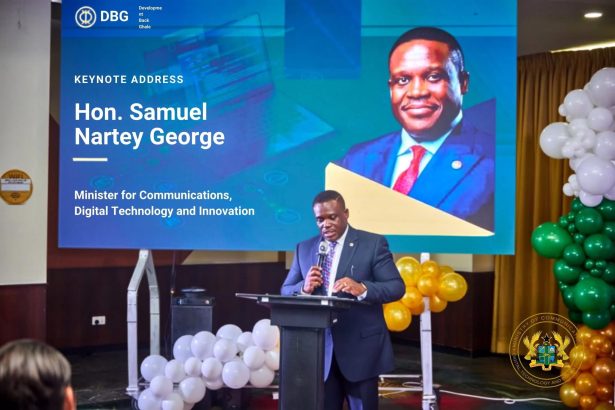
The Minister for Communication, Digital Technology and Innovations, Samuel Nartey George, has called for new and flexible financing models to help Ghanaian technology companies scale and compete in global markets.
He said Ghana’s progress in digital connectivity would not translate into a fully developed digital economy if technology businesses continued to struggle to access the capital needed to grow.
“Connectivity without capital is a road half-built,” the minister said at the Development Bank Ghana (DBG) ICT Sector Financing Roundtable in Accra.
The roundtable, held on the theme “From Connectivity to Capital: Unlocking Finance for Ghana’s ICT Sector,” focused on the financing challenges confronting businesses across Ghana’s technology ecosystem.
Mr George said Ghanaian companies were developing solutions in fintech, artificial intelligence, cybersecurity, agritech, healthtech, education technology, logistics and digital commerce, but many were being constrained by financing models that rely heavily on conventional collateral.
More Read
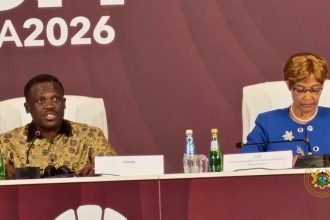
He argued that technology businesses often have different assets and growth models from traditional businesses and therefore require financing approaches that reflect the nature of the sector.
The minister called for increased use of venture capital, private equity, patient capital, blended finance, guarantees and credit enhancement mechanisms to provide businesses across the ICT value chain with the funding required to expand.
He said government was also working to strengthen the foundations of the digital economy through investments in infrastructure, digital skills, innovation, regulation and technology.
Mr George disclosed that the government’s One Million Coders Programme had recorded 141,954 registered accounts nationwide as of August 2026, with cybersecurity, data analytics and artificial intelligence among the areas attracting strong interest.
He also pointed to the Ghana National Artificial Intelligence Strategy, 2025–2035, and the government’s US$250 million investment in an Artificial Intelligence Computing Centre as part of efforts to establish a stronger AI ecosystem.
The minister said the next step was to ensure that these investments and the growth in digital skills translated into commercially viable businesses capable of attracting capital and creating jobs.
He therefore urged the government, DBG, financial institutions, investors, technology companies, development partners and academia to move beyond discussions and work together to develop bankable ICT projects and financing instruments capable of attracting domestic and international investment.
He said Ghana’s objective should extend beyond providing a market for foreign digital services to developing local companies that can compete internationally.
“Our ambition is not for Ghana to be a market for digital services. It is for Ghana to be a producer and exporter of them,” Mr George said.