Parliament has passed the 24-Hour Economy Authority Bill, 2025 into law, giving statutory backing to the government’s much-touted 24-Hour Economy and Accelerated Export Development Programme and clearing the way for its full-scale implementation.
The passage of the legislation represents a key policy win for the National Democratic Congress (NDC) administration under President John Dramani Mahama, whose government has positioned the 24-Hour Economy as a cornerstone of its long-term economic restructuring agenda.
The new law establishes the 24-Hour Economy Authority as the central body responsible for coordinating, supervising and driving the programme across multiple sectors of the economy, shifting the initiative from a policy concept to a legally anchored national framework.
Speaking to journalists after the Bill was approved, Majority Leader Mahama Ayariga said the legislation was necessitated by deep-rooted structural weaknesses that have constrained Ghana’s economic growth for decades. He pointed to the country’s heavy dependence on raw material exports, weak domestic value addition, rising production and logistics costs, and sustained reliance on imported finished and intermediate goods.
These challenges, he argued, have resulted in persistent value leakage from the economy, leaving Ghana vulnerable to recurring macroeconomic shocks and limiting its ability to generate sustainable, high-quality jobs.

According to the memorandum accompanying the Bill, the 24-Hour Economy programme is designed as a broad-based response to these constraints, with a focus on reorganising production systems, strengthening supply chains and building a labour force capable of supporting continuous economic activity across priority sectors.
At the heart of the programme is a framework that seeks to expand domestic production, improve efficiency within national supply and market systems, and enhance labour productivity through skills development, particularly in digital competencies. Government believes these interventions will help lower production costs, improve competitiveness and position Ghana to take greater advantage of regional and global markets.
The law also formalises a new institutional architecture for the initiative, replacing the previous arrangement under a Secretariat at the Office of the President with a fully constituted Authority. Government officials say this shift is intended to improve coordination across sectors and value chains, and to move away from fragmented, silo-based public sector interventions that have undermined past development programmes.
Under the framework, the 24-Hour Economy is structured as a state-led but privately driven initiative, with implementation expected to be carried out largely by organised private citizens, cooperatives, companies, industry associations and community-based organisations. Funding is projected to come predominantly from private and institutional sources, including development finance institutions, pension funds, multilateral partners and private foundations, rather than direct budgetary support.
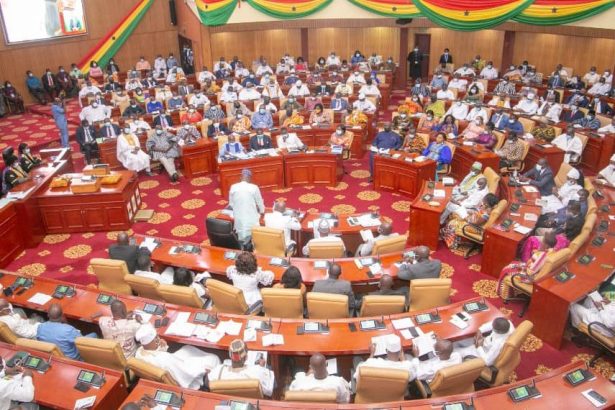
During parliamentary consideration, lawmakers examined the proposed Authority’s mandate, governance arrangements and accountability mechanisms, before approving the Bill following committee scrutiny and debate on the floor of the House.
With the legislation now enacted, attention is expected to shift to the rapid operationalisation of the 24-Hour Economy Authority and the rollout of the programme nationwide. Government sources insist that placing the initiative on a statutory footing is essential to protecting it from policy reversals during political transitions and ensuring continuity in tackling Ghana’s long-standing structural economic challenges.