African governments have been challenged to match their political commitments on healthcare with increased budgetary allocations and measurable action, as the African Union (AU) warns that the continent can no longer afford to rely heavily on external support to sustain its health systems.
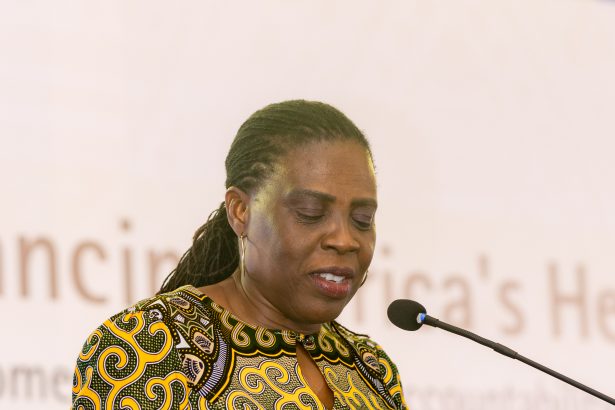
AU Commissioner for Health, Humanitarian Affairs and Social Development, Ambassador Amma Twum-Amoah, said governments must demonstrate their commitment to improving healthcare through national budgets and implementation rather than declarations made at international forums.
“Our communities must be reflected in our budgets. Our priorities must be demonstrated through implementation, and our progress must be measured by the improvement experienced in the daily lives of our people,” she said.
The Commissioner made the remarks at a High-Level Interactive Policy Dialogue on “Advancing Africa’s Health Agenda through Domestic Financing, Accountability and Strategic Innovations” held on the margins of the African Union Extraordinary Summit on Health in Accra.
She said Africa stands at a critical point in its pursuit of universal health coverage and stronger health security, but warned that widening financing gaps, population growth and emerging public health threats require governments to take decisive action.
More Read
According to Ambassador Twum-Amoah, healthcare should no longer be viewed as a recurring government expense but as an investment that strengthens economies, improves productivity and enhances national resilience.
“Expenditure on health is not merely a social cost. It is a strategic investment in human capital, economic growth, peace, productivity, national security as well as resilience,” she said.
She explained that resilient health systems serve as the first line of defence against disease outbreaks and other public health emergencies, while equitable access to healthcare promotes social cohesion and stability.
Ambassador Twum-Amoah said the continent has made several commitments over the years to improve health financing, but stressed that implementation has remained the greatest challenge.
She referenced the 2019 African Leadership Meeting on Investment in Health in Addis Ababa, which resulted in the adoption of the Addis Ababa Commitment on Shared Responsibility and Global Solidarity for Increased Health Financing.
The declaration calls on African countries to increase domestic investment in healthcare, strengthen accountability systems, improve coordination between ministries responsible for health and finance, and ensure efficient use of public resources.
“These commitments are not merely technical aspirations. They are political obligations. Their credibility will be determined by the quality, pace and consistency of their implementation,” she said.
The AU Commissioner said Africa’s changing global financing environment makes domestic investment in healthcare more urgent than ever.
She cautioned that while development partners continue to play an important role, no country can build a sustainable health system if it depends predominantly on external assistance.
“No health system can be truly sustainable if it depends predominantly on external assistance. Africa’s health security cannot be outsourced,” she said.
She urged governments to increase health allocations within national budgets, strengthen domestic resource mobilisation and adopt innovative financing mechanisms capable of providing predictable and sustainable funding for healthcare services.
However, she emphasised that increasing expenditure alone would not guarantee improved health outcomes.
“It is not only about mobilising more resources. It is equally about making every available resource work harder and deliver better results,” she added.
Ambassador Twum-Amoah argued that stronger financing must be accompanied by transparency and accountability across the health sector.
She called for improved planning, budgeting, procurement, implementation and monitoring systems to ensure public resources achieve measurable results.
“Financing without accountability breaks efficiency. Accountability without reliable data becomes difficult to enforce. Data without decisive action cannot improve lives,” she said.
She said governments must account not only for how much money is allocated to healthcare but also demonstrate where the resources are spent, who benefits and the impact achieved.
According to her, stronger participation by communities, civil society organisations, young people and the private sector is equally important in improving governance within the health sector.
“Accountability must be measured not only through reports and forecasts, but through lives saved, diseases prevented and communities protected,” she said.
The Commissioner also stressed the need for health financing systems that protect vulnerable populations from catastrophic healthcare costs.
She said stronger domestic resource mobilisation, effective risk-pooling mechanisms and better financial protection policies would expand access to essential healthcare services, particularly for women, children, young people, persons with disabilities and displaced populations.
“No African should be forced to choose between seeking healthcare and feeding their family. No child’s future should be determined by whether their parents can afford treatment,” she said.
She added that universal health coverage would only be meaningful if healthcare is accessible to everyone regardless of income.
“Universal health coverage must mean access for all, not access only for those who can pay,” she stressed.
Beyond financing, Ambassador Twum-Amoah urged African governments to invest in research, local pharmaceutical manufacturing, digital health technologies, artificial intelligence and stronger regulatory institutions.
She said Africa must transition from importing health technologies to developing and producing its own solutions.
“Africa cannot remain merely a consumer of health technologies developed elsewhere. We must become a continent that designs, produces and scales the solutions required to protect the health of its people,” she said.
She described the AU Extraordinary Summit on Health as an opportunity for leaders to move beyond policy declarations and demonstrate commitment through practical action.
“The time for action is now,” Ambassador Twum-Amoah said. “By investing in sustainable financing, accountable governance and transformative innovation, Africa can build healthier populations, stronger economies and more resilient societies.”