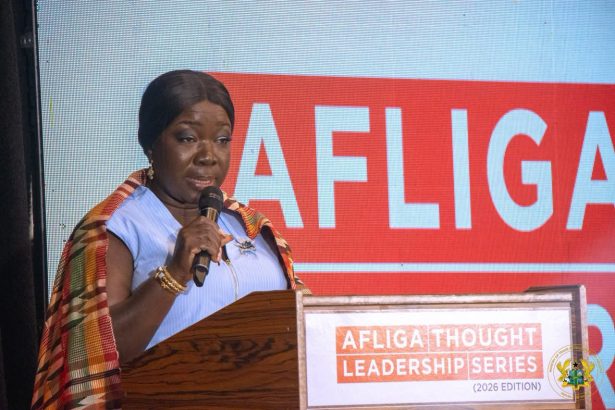
Trade, Agribusiness and Industry Minister Elizabeth Ofosu-Adjare has called for urgent reforms in financing, trade facilitation and local production to enable African businesses to fully exploit the opportunities created by the African Continental Free Trade Area (AfCFTA).
She said Africa’s economic transformation would remain limited if Micro, Small and Medium Enterprises (MSMEs), which form the backbone of the continent’s economy, continued to struggle to access affordable and appropriate financing.
The Minister made the call on Wednesday, August 26, 2026, when she delivered the keynote address as Hostess and Guest of Honour at the 2026 AFLIGA Thought Leadership Series at the La Palm Royal Beach Hotel in Accra.
The event was held under the theme: “Re-Imagining Africa’s SMEs Financing, Trade, Governance and Economic Development Goals in the Next Decade: Any Hope for Agenda 2063?”
Mrs Ofosu-Adjare said financing alone would not be enough to transform African businesses, arguing that access to capital must be accompanied by access to markets, efficient border systems, reliable payment mechanisms, affordable logistics and quality infrastructure.
More Read
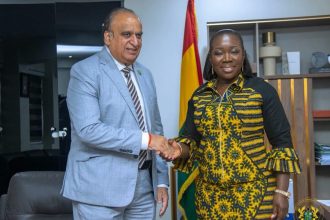
She pointed to the gap between Africa’s overall trade and trade among African countries as evidence of the continent’s unrealised economic potential.
According to the Minister, Africa’s merchandise trade reached approximately US$1.5 trillion in 2025, while intra-African trade accounted for only about US$213.8 billion.
She said the figures demonstrate the scale of opportunity that remains within the continent if barriers to cross-border commerce are addressed.
Mrs Ofosu-Adjare also warned against Africa’s continued dependence on exporting raw agricultural and mineral resources, calling for greater investment in processing and value addition.
She said processing resources locally would help create jobs, strengthen manufacturing and ensure that a greater share of the value generated from Africa’s resources remains on the continent.
The Minister cited government initiatives including the Feed the Industry Programme, the 24-Hour Economy and the Accelerated Export Development Programme as measures aimed at strengthening the link between agriculture, manufacturing and export development.
She also highlighted support for enterprise development through the Ghana Enterprises Agency (GEA) and Ghana Export Promotion Authority (GEPA), as well as efforts towards establishing a Women Development Bank to improve access to finance for women entrepreneurs.
Chairperson of the event and Member of the Council of State, Betty Mould-Iddrisu, also called for a stronger commitment to translating Africa’s development ambitions into tangible improvements in citizens’ lives.
She stressed the need for governments, businesses, financial institutions and development partners to work together to create an environment in which enterprises can grow and compete.
Mrs Mould-Iddrisu said empowering SMEs with access to finance, markets and opportunities would be critical to driving sustainable economic growth and advancing the objectives of Agenda 2063.
Mrs Ofosu-Adjare expressed optimism about Africa’s economic future but said the success of Agenda 2063 should not be judged by the passage of time or the achievement of a distant deadline.
She argued that Africans should begin experiencing the benefits of the continental development agenda now through stronger businesses, increased local processing and manufacturing, easier cross-border trade and expanded economic opportunities for women and young people.
“We should not have to wait until 2063 to experience the benefits of Agenda 2063,” she said, stressing the need for measurable economic gains for citizens in the years ahead.