The Nigeria government has published a controversial list of 60 alleged terrorism sponsors—48 individuals and 12 entities—but the move is already drawing scrutiny over its lack of detail and transparency.
Released on April 10 by the Nigeria Sanctions Committee (NSC) and reported by the BBC, the list provides scant information about the identities or roles of those named.
Crucially, authorities failed to disclose nationalities, organisational affiliations, or even basic identifiers such as photographs or gender—raising concerns about due process and the risk of misidentification.
The list forms part of Nigeria’s broader counter-terrorism framework under its 2022 law, which empowers the state to impose financial sanctions aligned with the United Nations Security Council.
While the measures—asset freezes and travel bans—are legally binding, critics argue that transparency is essential, particularly given Nigeria’s history of prolonged detentions without trial.

The announcement coincides with one of the country’s largest terrorism trials, involving over 500 suspects, with 386 convictions already secured.
Yet analysts point out that such prosecutions remain rare relative to the scale of violence that has gripped the country for over a decade.
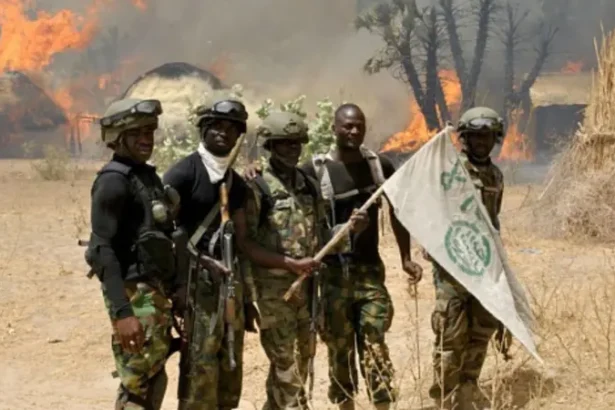
Insurgencies led by Boko Haram and its offshoot, Islamic State West Africa Province, have expanded beyond the north-east, while bandit groups continue to carry out mass kidnappings across multiple regions.
The inclusion of individuals allegedly linked to high-profile attacks—such as the Owo church massacre and the Kuje prison break—signals an attempt by authorities to demonstrate action.
However, the absence of verifiable details about suspects—some of whom are said to be involved in cryptocurrency financing, international terror logistics, and explosives expertise—raises questions about accountability.
Nigeria’s security landscape is further complicated by the presence of transnational groups such as Jama’at Nusrat al-Islam wal-Muslimin and Al-Qaeda in the Islamic Maghreb.
Meanwhile, the United States Department of State has warned its citizens against travel to Nigeria, citing terrorism, kidnapping and civil unrest.