By Patrick Biddah
The Minister for Health, Kwabena Minkah Akandoh, has called for urgent and sustained efforts to address the country’s growing mental health burden, disclosing that more than 2.3 million Ghanaians currently suffer from mental illness.
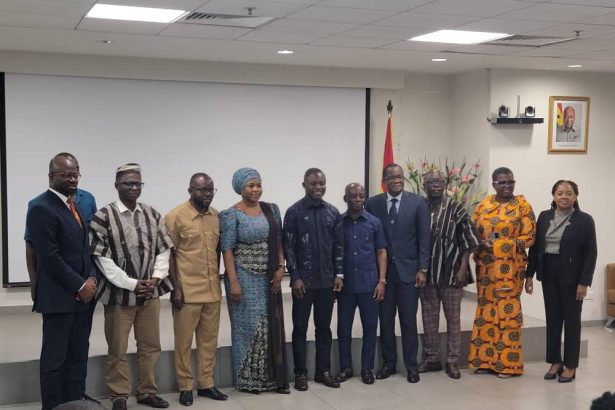
Speaking at the swearing-in ceremony of six newly constituted health boards in Accra on July 11 2025, the Minister, who is also the Member of Parliament (MP) for Juaboso, described the situation as a national crisis and a national opportunity.
The six boards are the Mental Health Authority, the Ghana College of Pharmacy, and the Allied Health Professions Council.
The rest are the National Ambulance Service, Traditional Medicine Council and the National Blood Council.
More Read
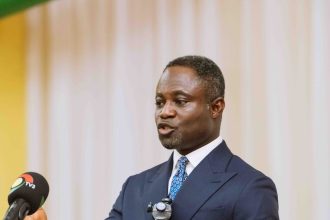
“Only about two percent of people living with mental illness receive any form of formal psychiatric treatment. That is a gap the new board of the Mental Health Authority must work to close,” he said.
He urged the board to lead a national shift in attitudes toward mental healthcare by expanding access, strengthening community services, integrating mental health into general care, and fighting stigma.
Turning to the Ghana College of Pharmacists, the Minister highlighted the severe shortage of pharmacists in the country, stating that Ghana has fewer than 20 pharmacists per 100,000 people — well below the OECD average of 85 and significantly lower than some advanced economies.
He noted that the College’s role is critical in addressing this gap through training, specialisation, and supporting Ghana’s ambition to become a hub for pharmaceutical manufacturing.
“Pharmacists must not only dispense but also lead in public health, drug formulation, and quality assurance. Their expertise will be central to Ghana’s future in medicine production,” he said.
Akandoh, also addressed the Allied Health Professions Council, calling for greater recognition and support for allied health workers such as physiotherapists, radiographers, nutritionists, and lab technicians.
“These professionals form the invisible backbone of healthcare delivery. We must ensure they are well-trained, regulated, and empowered to deliver the highest standards of care,” he emphasised.
For the National Ambulance Service, the Minister acknowledged the efforts made in building up the service but noted that response times remain unacceptably high, averaging 17 minutes—more than double the World Health Organization’s recommended 8-minute target.
He called for a complete overhaul of the emergency response system, including improving vehicle maintenance, public trust, and rural access, where usage remains alarmingly low.
Addressing the Traditional Medicine Council, the Minister said traditional medicine remains the primary healthcare option for about 60 to 70 percent of Ghanaians, with a practitioner-to-client ratio of 1 to 400.
He urged the Council to ensure that traditional practices are safely regulated and integrated with modern healthcare systems, while upholding standards and protecting patients.
Finally, Akandoh, raised concern over the persistent blood shortages in the country. Ghana collected just under 190,000 units of blood in 2024, far below the national need of over 300,000 units.
He urged the newly sworn-in board of the National Blood Service to lead aggressive donor campaigns and foster a culture of voluntary blood donation to ensure a steady and safe blood supply.
The Minister reminded all the boards that their roles go beyond routine oversight. “You are not being called to oversee merely — you are being called to steer,” he told them.
He concluded by pledging the Ministry’s support in policy and coordination but stressed the need for real impact, urging all boards to work across sectors and keep the Ghanaian patient at the centre of their decisions.