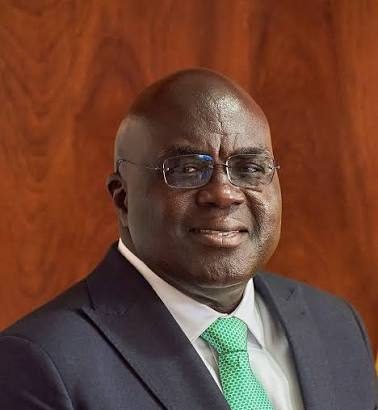
The Chief of Staff, Dr Julius Debrah, has challenged government institutions, financial institutions and private sector players to turn the investment interest generated at the maiden Invest Ghana Summit 2026 into tangible business partnerships, funded projects and job creation.
He said the success of the summit would ultimately be measured not by the number of investors who attended but by the projects that secured financing, commenced operations and contributed to Ghana’s economic development.
Dr. Debrah made the assertion at the closing ceremony of the two-day summit in Accra, organised by the Ghana Investment Promotion Authority (GIPA), with the support of the Ministry of Trade, Agribusiness and Industry and in partnership with the Ministries of Finance and Foreign Affairs.
The summit was under the theme; “Investing in Ghana’s New Economy: Building a Productive Economy That Creates Value and Competes Globally,” and brought together investors, business leaders, financiers and policymakers to explore investment opportunities in Ghana’s productive sectors.
According to the Chief of Staff, the discussions over the two days had provided an opportunity for the government to outline its economic priorities and examine the country’s investment prospects with people who had the capital and expertise to translate proposals into viable projects.
More Read
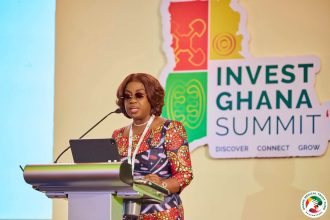
He described the engagements as constructive, expressing optimism that the interest generated would translate into lasting investments.
“The exchanges have been very constructive, and I believe we have every reason to be encouraged,” he said.
However, he said the critical task ahead was to convert the interest generated into sustainable investments that would expand production, create employment and improve the living conditions of Ghanaians.
Dr. Debrah said President Mahama’s economic vision is anchored on building a more productive and competitive economy through stronger industries, increased local production and value addition.
He identified the 24-hour Economy and Accelerated Export Development Programme and the Big Push Infrastructure Programme as key interventions designed to expand production, open up new markets and provide the infrastructure required for businesses to grow.
Dr. Debrah said the 24-hour Economy initiative would help Ghanaian businesses increase production and access new markets, while the Big Push programme would provide critical infrastructure to support industrial expansion and private sector development.
The Chief of Staff noted that discussions at the summit had highlighted significant investment opportunities in agriculture and agro-processing, manufacturing, energy, transport, logistics, digital infrastructure, mining and tourism.
In agriculture, he said, investment in irrigation, mechanisation, modern storage facilities and cold chain infrastructure would help increase production, reduce post-harvest losses and strengthen agro-processing.
Dr. Debrah also identified opportunities in pharmaceuticals, textiles and garments, automotive components, industrial machinery and packaging as areas where Ghana could expand its manufacturing capacity and reduce dependence on imported products.
On infrastructure, Dr. Debrah said investments in energy, transport, logistics and digital services are essential to reducing operational costs and improving the competitiveness of businesses.
He further pointed to the African Continental Free Trade Area (AfCFTA) as an important opportunity for investors to establish businesses in Ghana and access wider African markets through regional production networks.
Dr. Debrah acknowledged that investors consider not only the commercial prospects of projects but also the consistency of government policies, the effectiveness of public institutions and the protection of legitimate business interests.
He said the government is therefore committed to maintaining economic stability, implementing regulatory reforms, improving infrastructure and ensuring efficient public services.
Dr. Debrah assured investors that he would continue to facilitate cooperation among government institutions to address challenges confronting businesses, particularly where resolving such matters required the involvement of multiple agencies.
He, however, urged businesses to uphold good corporate governance, comply with Ghanaian laws and honour their obligations.
The Chief of Staff also underscored the importance of partnerships between foreign investors and Ghanaian entrepreneurs, saying international investors brought capital, technology, expertise and access to global markets, while local businesses offered knowledge of the domestic market and established business networks.
He urged financial institutions to play an active role in arranging appropriate financing for projects, particularly those requiring substantial capital and longer investment periods.
Dr. Debrah stressed that profitable businesses had the potential to reinvest earnings, expand production, introduce new products, create employment and support local suppliers, thereby contributing to industrial development and government revenue.
He said the Ghana Deal Room, Investor Facilitation Hub and business sessions had provided opportunities for local and international investors, entrepreneurs and financiers to discuss specific proposals, identify potential partners and explore financing arrangements.
Dr. Debrah urged participants to sustain the engagements beyond the summit, noting that some projects would require further technical assessments, negotiations and financing before they could be implemented.
The Chief of Staff said he expected the next edition of the summit to showcase concrete results from the inaugural event, including projects that had secured funding and commenced operations.
“When we convene the next Invest Ghana Summit, I hope we can point to partnerships that are already at work. I want us to be able to say which projects have secured financing and which have begun operations. That will be a true measure of the summit’s success,” he stated.
He said the government’s ambition is to position Ghana as one of Africa’s most attractive investment destinations, urging investors to take advantage of the opportunities presented and commit capital to the country’s development.
The Chief Executive Officer of GIPA, Simon Madjie, in his closing remarks, said investor confidence is built on trust and credibility rather than merely the existence of procedures and processes.
“Capital actually follows trust and not procedures and processes,” Mr. Madjie said, stressing that investors paid close attention to the reforms being undertaken by a country and the credibility of its leadership before committing resources.
He described the presentation of investment opportunities across all 16 regions as one of the major highlights of the summit, saying it had provided an unprecedented opportunity to showcase the country’s investment potential.
Mr. Madjie encouraged stakeholders to critically examine Ghana’s investment environment and make recommendations for reforms rather than allow concerns about the business climate to discourage domestic investment.
Mr. Madjie said GIPA is leaving the summit encouraged and determined to build on the relationships established, announcing that the second edition would be held next year.
He said the Authority’s long-term objective is to develop a globally recognised investment programme for Ghana that would attract capital, promote partnerships and support the country’s economic transformation.