Mining and exploration companies, property developers and geoscience professionals in Ghana are now required to operate under seven new regulations governing geological activities, following the instruments coming into force on August 26, 2026.
The regulations introduce requirements for geological mapping, ground investigations, seismic monitoring, access to geological information and mineral exploration up to the pre-feasibility study stage.
They also establish rules for geoscientific practice and the protection of geological heritage sites.
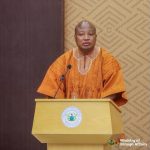
Director-General of the Ghana Geological Survey Authority (GGSA), Dr Prosper Akaba, said the instruments would strengthen oversight of geological work and ensure that data used for investment and national planning met the required standards.
He announced the development at the Ministry of Lands and Natural Resources’ fourth Progress Series, describing the regulations as a major step in implementing the Ghana Geological Survey Authority Act, 2016 (Act 928).
The instruments took effect after completing the mandatory 21 parliamentary sitting days.
Dr Akaba urged mining and exploration companies, local government authorities, research institutions, real estate developers and geoscience practitioners to familiarise themselves with the new requirements and ensure compliance.
Beyond the regulations, the Authority has completed 48 district mineral occurrence maps to provide information on mineral potential across the country. It stressed, however, that the maps do not constitute confirmed mineral reserves.
The GGSA has also completed a seismic hazard assessment for Ga South, Ga West and Ga North to support land-use planning in areas exposed to earthquake risks.
In June 2026, the Authority commissioned an upgraded National Seismological Network, restoring real-time transmission and monitoring of seismic activity and improving dam safety monitoring systems.
The Authority is also strengthening its regional operations, with renovation works at its Bono Regional Office in Sunyani completed and construction of its Eastern Regional Office in Koforidua about 70 per cent complete.
It has received a US$250,000 software and training donation from Seequent to improve geological modelling and data management.
Dr Akaba said the GGSA would continue mineral exploration, earthquake monitoring and geohazard mapping, while engaging industry players and local authorities to promote the use of geological data in development planning.