…Sir Sam Jonah proposes applied skills faculty to UCC, others
The Chancellor of the University of Cape Coast, Sir Sam Jonah, has challenged African universities to reunite academic qualifications with practical competence, arguing that higher education must produce graduates who can solve real-world problems rather than merely accumulate knowledge.
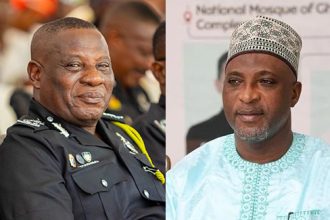
Delivering the keynote address at the installation of the University’s new Vice-Chancellor, Prof. Denis Worlanyo Aheto, in Cape Coast on Saturday, August 1, 2026, Sir Sam said universities must adapt to the age of artificial intelligence by placing greater emphasis on practical skills, innovation and industry collaboration.
He proposed that the University of Cape Coast become the first university in Africa to establish a full faculty of degree-awarding vocational education, offering Bachelor’s and Master’s degrees in Applied Skills that combine academic rigour with hands-on training.
“The certificate and the competence, reunited at last,” he declared.
More Read
Sir Sam envisioned graduates who leave university as skilled professionals capable of making meaningful contributions to their industries and Ghana’s economic transformation.
He suggested programmes including Bachelor of Applied Skills degrees in Renewable Energy Systems, Coastal and Aquaculture Enterprise, construction, agro-food, care and community health, creative industries and Human-AI Collaboration.
Under the proposed model, students would not graduate until they had demonstrated practical competence in their chosen fields. Renewable energy students, for example, would be required to install and maintain functioning solar systems, while aquaculture students would complete and operate commercial fish farms as part of their final assessments.
He further proposed that every programme be jointly designed with industry, with students undertaking extended placements in businesses under a German-style apprenticeship system.
Assessments, he argued, should move beyond theoretical examinations to practical demonstrations of competence.
“‘Describe a pump’ should give way to ‘Here is a broken pump; the village is waiting; fix it,'” he said.
Sir Sam argued that universities worldwide face an unprecedented challenge because artificial intelligence has ended the traditional scarcity of knowledge.
He observed that today’s students have instant access to vast amounts of information through AI-powered technologies capable of answering questions, writing code, solving complex problems and drafting professional documents.
“The scarcity of answers is over,” he said. “We now live in the Age of Answers.”
According to him, universities can no longer justify their existence simply by transmitting knowledge.
Instead, they must focus on producing graduates capable of exercising judgement, creativity, ethical reasoning and practical competence, qualities he said machines cannot easily replicate.
“If our answer is to transmit knowledge, then we are finished,” he said. “But if our answer is to form human beings who can do what no machine can do, then the university is about to enter its greatest century.”
The Chancellor questioned whether conventional degrees remain adequate in an era when AI systems can successfully complete many academic examinations.
He argued that qualifications should become “certificates of capability” rather than certificates of memory.
Too many African graduates, he lamented, leave university having memorised theories without acquiring practical skills.
“Knowledge of a thing is not the ability to do the thing,” he said, adding that a nation filled with graduates who know but cannot do would remain poor despite being “beautifully certificated”.
Referring to the ongoing national debate over so-called “useless degrees”, Sir Sam dismissed the characterisation.
“There are no useless degrees,” he said. “There are only degrees that have been separated from usefulness, and it is our job to reunite them.”
He recalled that Ghana’s first President, Kwame Nkrumah, envisioned universities producing both thinkers and doers, noting that the University of Cape Coast itself was originally established to train teachers for national development.
Sir Sam cited reforms undertaken by leading institutions such as the Massachusetts Institute of Technology, Stanford University and Harvard University, which have integrated artificial intelligence across their academic programmes.
He noted that MIT aims to produce graduates who are “bilingual” in both their disciplines and AI, while Harvard has introduced AI tutors to support student learning.
He also highlighted Germany’s dual vocational education system and China’s recent overhaul of thousands of university programmes to reflect the changing technological landscape.
For Ghana, however, he stressed that artificial intelligence should serve as a tool for creating opportunities rather than as another imported technology consumed without local innovation.
While acknowledging that establishing a new faculty would require significant planning and investment, Sir Sam proposed three immediate steps for the University.
These include establishing a student AI club focused on solving practical community problems, connecting students with Ghanaian AI professionals in the diaspora for mentorship, and redesigning academic programmes around substantial project-based learning rather than conventional lecture-based teaching.
He said students should graduate having built real products or solved tangible problems rather than merely passing examinations.
Addressing the newly installed Vice-Chancellor directly, Sir Sam said he had come not to hand over “keys” but “a storm”, urging Professor Aheto to become a transformational leader rather than a caretaker.
He encouraged the new Vice-Chancellor to preserve academic standards while breaking down barriers between theory and practice, insisting that every academic programme should be able to answer one fundamental question: “What can your graduate do?”
The Chancellor also praised Professor Aheto’s record of attracting more than US$30 million in research funding, supporting over 400 scholarships and developing the University’s Centre for Coastal Management into an Africa Centre of Excellence.
He pledged his personal support for the University’s future reforms and fundraising efforts.
Concluding his address, Sir Sam urged students not to wait for curriculum reforms before embracing innovation.
“Form the club. Find the problem. Build the thing,” he said.
Reflecting on the symbolic significance of Cape Coast, he called on the University to lead Africa’s educational transformation, declaring that while machines may increasingly provide answers, the future will belong to people who possess the skills, judgement and character to turn knowledge into action.
Denis W. Aheto is a Professor of Coastal Ecology and Interdisciplinary Ocean Studies and Director of the Centre for Coastal Management, The Africa Centre of Excellence in Coastal Resilience (ACECoR), at the University of Cape Coast.
He holds PhD and MSc degrees in Environmental Sciences and Tropical Aquatic Ecology, respectively, from the University of Bremen. He also holds an MSc degree in Rural Development from the Swedish Agricultural University.
He earned his BSc (Hons) from the University of Cape Coast. Prof. Aheto is a distinguished scholar with over 15 years’ experience in scientific project management.
He is the authorized representative of institutionally donor-funded projects in marine/coastal and fisheries management at the University of Cape Coast, funded by the World Bank, African Union, USAID, DANIDA, among others.
He’s passionate about international academic partnerships in his area of professional work.
He has an outstanding record of intellectual publications in indexed journals on coastal and marine ecosystem conservation, small-scale fisheries, marine spatial planning, wetland ecology, and marine conflict.
He serves on several national and international boards, including as technical advisor to the World Bank’s West Africa Coastal Areas Management Program. He holds several meritorious awards for his contributions to his field.