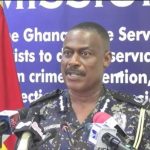



…..As GMA & GRNMA criticize Prof Agyeman Badu Akosa for revealing identities of errant members
The report of the committee chaired by Prof Agyeman Badu Akosa into the circumstances surrounding the death of road accident victim Charles Amissah may fail to address the deeper structural problems confronting Ghana’s public health system, as concerns grow over the persistent absence of senior medical officers from hospital wards.
Information gathered by The Herald suggests that the challenges extend far beyond the widely discussed “no-bed syndrome”, with many senior medical officers, specialists and consultants reportedly absent from duty for prolonged periods, leaving junior doctors and house officers overwhelmed by the workload.
According to sources familiar with operations at major public hospitals, several senior doctors spend significant amounts of time managing private clinics and hospitals, leaving patients referred to facilities such as Korle Bu Teaching Hospital with limited access to experienced medical practitioners.
The revelations emerge as the Ministry of Health has directed seven health professionals from the Police Hospital, the Greater Accra Regional Hospital and Korle Bu Teaching Hospital to face disciplinary proceedings following the release of the committee’s report into the death of Charles Amissah.

Those cited for disciplinary action are Dr Aida Druante, Dr Genevieve Adjah, Joy Daisy Nelson and Salamatu Alhassan of Korle Bu Teaching Hospital; Dr Nina Naomin Eyram and Akosua B. Turkson of the Greater Accra Regional Hospital; and Dr Anne-Marie Kudowo of the Police Hospital.
Charles Amissah, an engineer with Promasidor Ghana, died from injuries sustained in a hit-and-run accident in February this year after a vehicle knocked him off his motorbike while he was returning home from work. The medical professionals refused to treat him, hiding behind “no-bed syndrome”, a claim which has been rejected by the findings of the committee.
Sources told The Herald that many senior medical officers attached to Korle Bu own private health facilities in and around the Teaching Hospital, including the Bishop Bowers area of Accra and are rarely present on the wards.
As a result, junior doctors, many of whom are still undergoing training, are often left to manage patients without adequate supervision. These house officers reportedly rely heavily on ordering laboratory tests, scans and X-rays while awaiting direction from senior colleagues who are frequently unavailable to review patients or prescribe treatment plans.
The Herald has also learnt that some consultants reportedly visit the hospital wards only once a week and spend limited time attending to patients before returning to their private practices.
According to insiders, it is an “open secret” within the health sector that several private health facilities operating around Korle Bu are owned by senior doctors who remain on the payroll of the teaching hospital despite limited presence at their assigned posts.
Others are said to divide their time between lecturing in medical schools, supervising students, and undertaking locum work at other facilities, leaving ward responsibilities largely in the hands of inexperienced medical doctors and overburdened nurses, who often rely on Google searches to treat patients.
The situation, according to sources, has contributed to needless deaths, growing frustration among patients and relatives, with some patients reportedly abandoning treatment at public hospitals altogether or returning home due to dissatisfaction with the level of care.
There is also scepticism within sections of the health sector about whether the findings of the committee’s report will lead to meaningful sanctions, amid claims that some officials responsible for enforcing discipline are themselves senior officers accused of neglecting their ward duties.
Sources argue that a culture of institutional protectionism could undermine attempts to hold errant medical professionals accountable. Already, the Ghana Medical Association (GMA) has responded through its General Secretary, Dr Richard Selormey, who cautioned against excessive attacks on the medical professionals cited in the report.
The President of the Ghana Registered Nurses and Midwives Association (GRNMA), Perpetual Ofori-Amanfo, has also criticised the decision to publicly disclose the names of health professionals cited in the investigative report into the death of Charles Amissah, describing it as unnecessary and harmful.
Beyond staffing concerns and attitudinal decay, serious questions are also being raised about deteriorating infrastructure at some of the country’s major hospitals.
Korle Bu Teaching Hospital, in particular, is described by sources as a deteriorating facility where malfunctioning air-conditioning systems, broken fans and poor ventilation have created difficult working conditions for both patients and healthcare workers.
Some dedicated medical staff are said to struggle to provide adequate care under such circumstances, with poor infrastructure compounding the pressure already created by staff shortages and overcrowding.
Meanwhile, the Ghana Police Service, which oversees the Police Hospital, has yet to publicly comment on the committee’s findings.
Korle Bu Teaching Hospital remained silent for more than 24 hours after the report was released, while the Greater Accra Regional Hospital has also not issued any official response.
The GMA General Secretary, Dr Selormey, speaking on the matter, cautioned against excessive attacks on the medical professionals cited in the report.
Dr Selormey argued that while accountability was necessary, care must also be taken not to demoralise dedicated doctors who continue to work professionally and under difficult conditions, sometimes even paying for treatment for patients who cannot afford medical care.
The GMA also expressed concern that the publication of doctors’ names in the Ministerial Investigative Committee’s report on the death of Charles Amissah is shifting public attention away from deep-rooted systemic failures in emergency care delivery.
In a communication to all members dated May 7, 2026, the GMA leadership acknowledged the report’s findings, which identified “significant systemic weaknesses and longstanding gaps in emergency care delivery in Ghana.”
The Association, however, warned that naming health workers who were on duty during the unfortunate incident has caused media discussions to focus “attention and attacks on these named individuals rather than the wider systemic issues.”
“The GMA will immediately commence processes to secure an official copy of the report in order to properly review its findings and recommendations to guide our next course of action,” the statement signed by GMA President Prof. Dr. (Med) Ernest Yorke and General Secretary Dr. (Dent) Richard Selormey said.
Charles Amissah’s death, which occurred under circumstances that triggered public outrage, prompted the Health Minister to set up an investigative committee to examine what went wrong.
While the full details of the report have not yet been officially released by the Ministry, the GMA confirmed that it has recommended “urgent reforms” to address challenges in emergency care.
The Association stressed that while it supports accountability and the highest standards of professional practice, any disciplinary processes must be “fair, transparent, evidence-based, and consistent with due process.”
“We will provide appropriate support to any member who may be subject to disciplinary proceedings arising from this matter, in line with our mandate to protect the welfare, rights and professional integrity of our members,” the GMA assured.
The doctors’ group also urged all members “to remain calm and avoid speculations or public commentary that may prejudice the process or the reputation of colleagues.”
The Association promised to engage affected colleagues and relevant authorities, and to keep members informed on further developments.
“Let us remain united, focused, and committed to improving emergency care in Ghana while safeguarding justice and fairness for all health professionals,” the statement concluded.
Speaking to Accra-based Joy FM yesterday, Thursday, May 6, Madam Ofori-Amanfo said while the association is yet to formally review the full report, the manner in which information has been released into the public domain raises serious concerns.
She noted that although accountability is important, naming individual health workers in such sensitive cases exposes them to undue public scrutiny and emotional distress.
“The report has come, and we’ve had snippets of it through media engagements and comments from the Ministry of Health. As an association, we are yet to convene our council to look at the issues,” she said.
“But in the interim, what we want to say is that this is not the first time such issues have come up in this country.”
She argued that it would have been more appropriate for the report to highlight categories of professionals involved, rather than identifying individuals.
“In putting out information into the public domain, I don’t think, and we don’t think, that it is necessary for all the names of these professionals to have been mentioned out there.
“At least to say that the three doctors or to say that the three nurses or to say that the four doctors or whatever would have survived,” she stated.
Madam Ofori-Amanfo stressed that the professionals named in the report are young practitioners serving under difficult systemic conditions and deserve fair treatment and protection, especially regarding their mental health.
“These individuals committed no crime in going through medical school or nursing college to serve this country. We know the systemic challenges in our health system, and emergency care does not always come with ideal conditions,” she said.
She further noted that the case reflects a chain of events rather than the actions of isolated individuals, urging a broader examination of systemic failures within the health sector.
According to her, while accountability is necessary, public communication of such reports must be handled with sensitivity.
“If you are saying that the employer should address the matter or the regulatory body should address the matter, the communications, of course, will go, but there was no need. Is it to name a shame?
“If that’s where we are going as a country, then we have to name a shame when it comes to every issue related to this economy,” she added.
She cautioned that such approaches could have lasting psychological effects on health workers, particularly young professionals who are still building their careers.
“The mental health toll on these individuals is something we must not ignore,” she said, adding that responsible reporting and institutional handling of such cases are critical to maintaining trust in the health system.
The independent investigation, chaired by renowned pathologist and a former Director-General of the Ghana Health Service, Prof. Agyeman Badu Akosa, found that Amissah did not die instantly from the road accident injuries, but from prolonged, preventable blood loss (exsanguination) due to failure of emergency medical care.
Consequently, directives have been issued to the authorities of the respective hospitals and regulatory bodies to act swiftly.
At a news briefing in Accra on Wednesday, May 6, 2026, during the presentation of the committee’s report, the Minister of Health, Kwabena Mintah Akandoh, announced immediate steps to ensure accountability and prevent future tragedies.
Beyond sanctions, the minister emphasised ongoing and planned reforms to strengthen emergency care, including the rollout of a national electronic bed management system to improve patient allocation and reduce delays.
“The most important aspect is for us to be able to avoid the avoidable deaths we have witnessed,” Mr Akandoh said.
He also announced that the Ghana Armed Forces Critical Care and Emergency Hospital would be opened to the public as a national resource.
Reaffirming the government’s commitment, the minister stressed that the goal was not just to publish findings but to implement recommendations that would prevent avoidable deaths and improve Ghana’s emergency healthcare system.
“I want to repeat and assure the committee that your work will not be in vain. We’ll endeavour to implement all the recommendations in the best interest of Mother Ghana,” he added.
The report said Amissah was alive at every stage from the accident scene to the Police Hospital, Greater Accra Regional Hospital and Korle Bu Teaching Hospital, but none of those facilities provided timely life-saving intervention such as bleeding control, IV fluids or blood transfusion.
The report stated that pathology confirmed a “slow death from medical neglect”, emphasising that early intervention at any point could have saved his life.
The fatal injury, a deep arm wound damaging major blood vessels, was survivable with basic emergency care, the report said.
The committee, formed by the Minister of Health on February 23, also recommended systemic reforms in Ghana’s emergency care system.
Presenting the report, Prof. Akosa said the death of Amissah had not only exposed a tragic chain of missed opportunities but also forced a national reckoning, one that the investigative committee insisted must lead to real, lasting changes.
“The pathology confirms a slow death from medical neglect, and was not from the instant trauma. What it means is that, if at any of these facilities, there had been medical intervention, Charles Amissah could have survived,” he said.
“The post-mortem report was very pertinent. The significant post-mortem findings were that there was a deep laceration injury of the right upper arm, blood vessels and muscles. Charles Amissah had a comminuted open fracture of the right upper humerus,” he stated.
In the aftermath of its findings, the committee’s recommendations read less like technical directives and more like a blueprint to prevent another life from slipping away under similar circumstances.
At the heart of it is a simple, but urgent principle: no patient in a life-threatening condition should ever be turned away without immediate care.
But beyond individual accountability, the report indicated that the problem ran deeper into the very structure of emergency care in Ghana, with one of the most significant proposals being the creation of a national emergency care fund.
Under this system, any patient picked up in critical condition would be guaranteed immediate treatment, whether at a public or private facility, without delays over payment.
The first 24 hours, the committee argued, were often the difference between life and death, and no hospital should hesitate to act because of financial uncertainty.
Alongside this was a call for a mandatory policy requiring all hospitals to stabilise emergency patients before any referral.
The committee envisioned a system where the nearest facility became the first line of defence, not a checkpoint that passed responsibility along.
The report highlighted the need to bring the Ghana Armed Forces’ Critical Care and Emergency Hospital fully into public use, transforming it into a shared national asset capable of easing pressure on civilian hospitals.
Additionally, the committee warned against letting the report gather dust, stressing the need for a central governance system to ensure reforms were implemented and enforced.
The committee, tasked to examine the sequence of events, decision-making processes, and any factors that might have contributed to delays in emergency care, included Technical Advisor at the Ministry of Health, Dr Koku Awoonor-Williams; Consultant of Emergency Medicine, Dr Conrad Buckle; Fellow in Emergency Medicine at Korle Bu Teaching Hospital, Dr Henry Kwasi Bulley.
The rest were Senior Emergency Medicine Physician at the University of Ghana Medical Centre, Dr Kwame Ekremet; Emergency and Critical Care Nurse, Faustina Excel; Emergency and Critical Care Nurse, Gertrude Nana Konadu Agyeman; Head and Director Legal of the Ministry of Health, Inua I. Yusu, and Senior Administrative Manager at the Ministry of Health, Dacosta Osei Agyekum.