….1932 boat event reveals sharp contrast
Would you believe that today’s severely polluted Korle Lagoon once hosted a series of organised boat races, usually involving sailing or rowing boats, known as regattas?
The heavily polluted lagoon was once a vibrant centre for water recreation in the capital, drawing colonial officials, local elites and residents to its shores for such events.
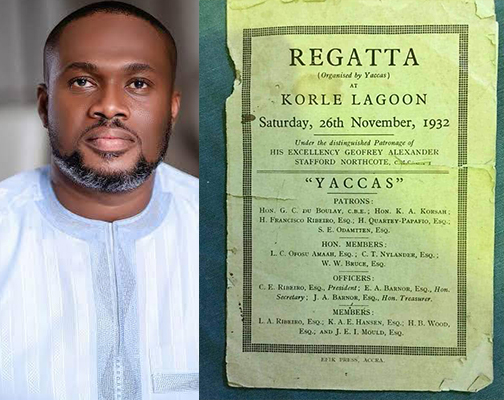
Historical rowing records sighted by The Herald reveal that on Saturday, 26 November 1932, some 25 years before the Gold Coast became Ghana after independence, the lagoon served as the venue for a major regatta organised by the Yaccas.
Sadly, the water body is now frequently cited as one of the most contaminated in the world, despite various restoration efforts. It has become a massive dumping ground for industrial and household waste, severely reducing its aquatic, ecological and economic value, while also contributing to flooding.
More Read
Once a vibrant, creative and recreational hub, the site has deteriorated into one of the most polluted places globally, overwhelmed by human, electronic and other forms of waste.
Notably, the lagoon is also home to the infamous Lavender Hill, a major dumping site for human waste in the heart of the capital. Ironically, despite its pleasant name, it emits one of the most offensive odours imaginable.
The 1932 regatta was held under the distinguished patronage of Geoffrey Alexander Stafford Northcote, with some prominent family names whose grandchildren are still in the Ghanaian society.
Patrons included Hon. G. C. du Boulay, CBE; Hon. K. A. Korsah; H. Francisco Ribeiro, Esq.; H. Quartey-Papafio, Esq.; and S. E. Odamtten, Esq.
Other members listed were Hon. L. C. Ofosu-Amaah, Esq.; C. T. Nylander, Esq.; and W. W. Bruce, Esq.
The officers were C. E. Ribeiro, Esq. (President); E. A. Barnor, Esq. (Honorary Secretary); and J. A. Barnor, Esq. (Honorary Treasurer).
Members included L. A. Ribeiro, Esq.; K. A. E. Hansen, Esq.; H. B. Wood, Esq.; and J. E. I. Mould, Esq. The announcement was printed by Efik Press, Accra, underscoring the lagoon’s status at the time as a prized social and sporting hub.
Today, however, the lagoon’s glorious past has been overshadowed by severe pollution. It is heavily choked with waste carried by the Odaw River and from surrounding areas, including markets, churches, mosques, schools and residential communities, effectively serving as the final cesspool for much of Accra’s industrial and domestic refuse.
Ecologically, the damage has been devastating. The lagoon has lost nearly all its natural aquatic life and its ability to regenerate, with dangerously low dissolved oxygen levels caused by massive organic pollution.
The pollution also poses serious health and safety risks to surrounding communities and contributes to severe flooding during the rainy season, as siltation restricts water flow to the sea.
Despite initiatives such as the Korle Lagoon Ecological Restoration Project (KLERP), persistent improper waste disposal continues to keep the lagoon in a state of crisis.
The degradation remains ongoing, with garbage, including electronic waste, still being discharged into the lagoon, undermining rehabilitation efforts.
A private company, Dredge Masters, is reportedly paid millions regularly by the Ministry of Works and Housing for dredging activities. However, there is little visible improvement to suggest a return to the lagoon’s former state, reminiscent of 1932, when boat races were held, and fish from its waters flowed into the Gulf of Guinea.
Environmental experts warn that the lagoon has effectively become a heavily degraded channel rather than a productive ecosystem, stripped of its ecological and economic value.
They caution that without urgent and coordinated action, including strict enforcement of sanitation laws and improved waste management systems, the condition of the lagoon will continue to deteriorate, further endangering public health and diminishing the city’s natural heritage.