Information available to The Herald suggests that the government is withholding critical aspects of the controversial GH¢68.7 billion forensic audit into contractor arrears, raising concerns over a possible cover-up.
Sources indicate that many individuals and entities implicated in the audit, including contractors and suppliers, have not been publicly named, despite evidence of widespread irregularities. The apparent silence, observers say, risks undermining transparency and accountability in what is shaping up to be one of the most significant public finance scandals in recent years.
Meanwhile, some companies cited in the audit have begun refunding monies to the state, as pressure mounts on those involved in the alleged scheme.
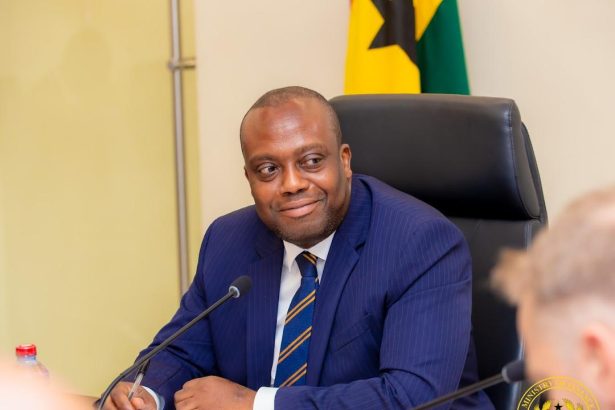
One such case involves Rans Logistics, a firm flagged in the Auditor-General’s special report for multiple infractions. The Deputy Minister for Finance, Thomas Nyarko Ampem, disclosed that the company refunded GH¢19.1 million to the state just a week after the audit findings were presented to Parliament.
Speaking before Parliament’s Public Accounts Committee (PAC) on Monday, March 30, 2026, Mr Ampem said the repayment underscores the impact of the audit.

“On 10 March, I presented the findings of the audit to Parliament. Exactly a week later, on 17 March, one of the companies identified, Rans Logistics, has gone ahead to refund GH¢19.1 million to the state,” he said.
He further revealed that the company had been paid for over 7,000 metric tonnes of rice that remain unaccounted for.
“We expect the value of these 7,000 metric tonnes of rice to be reimbursed as well. The Attorney-General is working with his team to determine the appropriate course of action for all identified infractions,” he added.
Mr Ampem emphasised that the primary objective of the audit is to safeguard public funds.
“This example demonstrates the importance of the audit. It was intended to protect state resources, and it is already beginning to achieve its purpose,” he noted.
However, deeper findings from the audit raise troubling questions about procurement and oversight within the previous administration.
Parliament was told that in 2024, the Akufo-Addo government paid for 34,000 metric tonnes of rice to mitigate the effects of a dry spell. Yet, only 24,000 metric tonnes were received and distributed by the Ministry of Food and Agriculture, leaving 10,000 metric tonnes unaccounted for despite full payment having been made.
In another instance, the audit revealed that a company contracted to supply 100,000 metric tonnes of maize, valued at GH¢771.2 million, delivered only 11,900 metric tonnes. Despite this, the Ministry of Food and Agriculture submitted store receipt advice to the Ministry of Finance as evidence of full delivery to facilitate payment.
The documentation was reportedly backed by a checklist certified by the Ministry’s internal auditor, further deepening concerns over internal controls and possible collusion.
The Herald has also gathered that the maize and rice transactions, including the 100,000 metric tonnes deal, are shrouded in opacity, with some companies involved allegedly linked to a former Minister under the Akufo-Addo administration.
In one instance, a businessman said to be a senior elder of the Pentecost Church was reportedly awarded part of the contract and received payment, although questions remain over whether the supplies were delivered.
Under the Farmer Food Relief and Recovery Programme, a transport company contracted to move 134,000 metric tonnes of maize and rice nationwide at a cost of GH¢115.2 million, transported only 35,000 metric tonnes, valued at GH¢30.9 million, but was paid GH¢50 million.
Additionally, the company received 7,311 metric tonnes
of rice, equivalent to 14,622 bags of 50kg rice, valued at GH¢11.7 million in lieu of cash for no work done, bringing total payments to GH¢61.7 million.
The Auditor-General subsequently rejected a further request for GH¢65.2 million submitted by the Ministry of Food and Agriculture for the same contract.
As Parliament’s Public Accounts Committee continues its scrutiny of the audit findings, pressure is mounting on authorities to fully disclose all individuals and entities involved and to pursue appropriate sanctions.
For now, questions persist over whether the government will release the full details of the audit or continue to shield key actors implicated in the scandal.