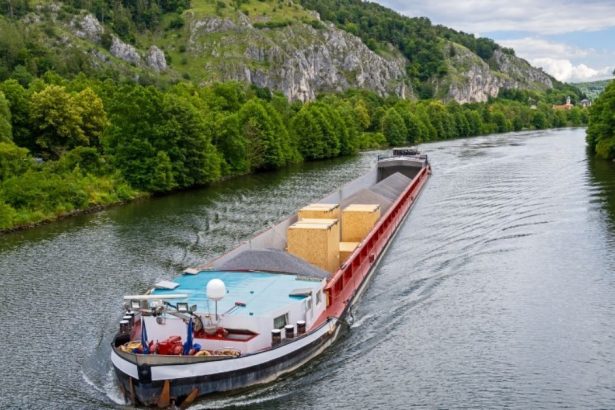
The John Dramani Mahama administration is advancing plans to introduce a coastal water transport system along Ghana’s shoreline as part of broader efforts to reduce pressure on the country’s road networks and strengthen sustainable mass transit.
The Deputy Minister for Transport, Dorcas Affo-Toffey, disclosed that the procurement process for selecting a consultant to conduct a feasibility study for the project is in its final stages.
She made the announcement at the 7th Africa Ports Forum 2026 held in Accra, where stakeholders in the maritime and logistics sector gathered to discuss the future of Africa’s port infrastructure and blue economy.
Affo-Toffey noted that Ghana’s maritime sector remains central to the national economy, stressing that more than 90 per cent of the country’s international trade moves by sea. She said this underscores the strategic importance of ports in driving national transformation and economic growth.
She stated that the government’s maritime agenda under President John Dramani Mahama is aimed at positioning Ghana as a leading, efficient, secure, and sustainable maritime logistics hub in West Africa.
According to her, the policy direction focuses on modernising port infrastructure, reducing operational costs, enhancing security, and promoting the sustainable development of the blue economy.
The Deputy Minister highlighted the Tema Port Expansion Project as a key achievement, noting that the first two phases of the US$1.5 billion project were commissioned last November through a partnership between Meridian Port Services and the Ghana Ports and Harbours Authority. She said the expansion has improved vessel turnaround times and increased container handling capacity.
On operational efficiency, she indicated that the Ghana Ports and Harbours Authority has fully adopted a 24-hour operational model in line with the government’s proposed 24-hour economy policy, emphasising that port activity must match the continuous nature of global trade.
“Trade does not sleep, and neither should our gateways,” she said.
She further revealed ongoing upgrades at the Takoradi Port to position it as a major oil, gas, and bulk cargo hub.
Madam Affo-Toffey also announced plans, in collaboration with private sector partners, to establish a structured coastal marine transport network linking Ghana with neighbouring Togo, Benin, and Nigeria.
To fully harness the potential of Ghana’s Exclusive Economic Zone, she said government intends to develop an integrated coastal water transport system to improve connectivity along the national coastline.
She also reaffirmed government’s commitment to completing the Boankra Integrated Logistics Terminal in Kumasi, describing it as a strategic project expected to extend port services inland and strengthen Ghana’s role as a transit corridor for landlocked countries such as Burkina Faso, Mali, and Niger under the African Continental Free Trade Area framework.
On digital transformation, the Deputy Minister said government is investing in AI-powered customs and risk management systems to enhance efficiency at the ports and reduce human interference in clearance processes.
In the area of maritime security, she disclosed that Ghana has achieved full compliance with the International Ship and Port Facility Security (ISPS) Code and has upgraded its Vessel Traffic Management System to monitor offshore activities up to 200 nautical miles.
She added that Ghana remains committed to environmental sustainability, including the development of green shipping corridors in line with global maritime standards and the United Nations Sustainable Development Goals.