Gold Fields has announced plans to invest more than $1 billion in its Tarkwa Mine over the next three to four years as part of efforts to extend the mine’s lifespan and support Ghana’s economic development.
The commitment was disclosed by the Executive Vice President for External Affairs and Investor Relations of Gold Fields, Jongisa Magagula, during the Ishmael Yamson and Associates Business Roundtable 12 held in Accra.
According to Madam Magagula, the company has invested approximately US$5 billion in capital and over $50 million in exploration activities over the past three decades to transform Tarkwa into one of Africa’s largest open-pit gold mines.
She noted that annual production at the mine has increased from about 12,000 ounces when Gold Fields first assessed the operation in the early 1990s to approximately 500,000 ounces today.
Madam Magagula said the mine currently has a life-of-mine expectancy of 21 years and that the planned investment aligns with the Government’s Reset Agenda, which seeks to attract long-term foreign direct investment into critical sectors of the economy.
More Read
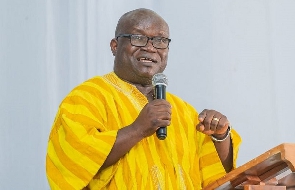
She described the Tarkwa Mine as a successful example of collaboration between government and private investors, attributing its growth to policies that created a favourable investment climate and enabled billions of dollars in investment.
Highlighting the company’s contribution to Ghana’s economy, she disclosed that Gold Fields contributed about GH¢5.8 billion to government revenue in 2025 through corporate taxes, royalties, dividends and other statutory payments, up from GH¢4.4 billion in 2024.
The company also recorded host community procurement expenditure of GH¢6.5 billion and local procurement spending of GH¢8.8 billion during the year.
The Gold Fields Ghana Foundation, which is funded through a contribution of $1 for every ounce of gold sold and 1.5 per cent of pre-tax profit, has invested more than $110 million in community development projects.
These investments have focused on health, water and sanitation, agriculture, education and infrastructure.
Among the projects undertaken by the foundation are the construction of 52 schools, the drilling of 116 boreholes, the development of the 33-kilometre Tarkwa-Damang asphalt road, the construction of bridges and the Tarkwa Aboso Stadium.
Madam Magagula stressed that more than 70 per cent of revenues generated by Gold Fields in Ghana remain in the country, supporting jobs, local businesses and economic growth.
She reaffirmed the company’s commitment to deepening its partnership with Ghana by creating quality employment opportunities, supporting local enterprises, investing in communities and sharing mining best practices and technological innovations.
Gold Fields also highlighted its long-standing support for sports development in Ghana, including sponsorship of the national football teams the Black Stars, Black Queens and Black Challenge, as well as support for the Women’s Premier League.
The company recently announced a $5 million sponsorship package aimed at promoting sports development and youth empowerment in the country.
Madam Magagula said Gold Fields remains committed to ensuring that Ghana benefits meaningfully from its natural resources while maintaining safe operations and responsible environmental practices.
“At Gold Fields, our purpose is to create enduring value beyond mining, and we look forward to an even stronger partnership with Ghana as we deliver this purpose,” she said.