


Ghana’s gross international reserves fell by about US$1.9 billion between June and August 2026, leaving the country with a smaller foreign-exchange buffer ahead of the period when demand for dollars typically rises.
Data from the Bank of Ghana show that gross international reserves declined from US$12.94 billion at the end of June to US$11.07 billion at the end of August.
The August position represented 4.2 months of import cover, down from 5.7 months at the end of 2025.
Reserves had risen to US$14.16 billion in March 2026 before declining to US$13.95 billion in April and US$12.94 billion by the end of June.
The latest figures mean gross reserves have fallen by about US$3.09 billion from the March peak.
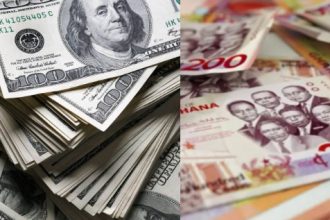
The decline comes despite a strong external trade performance, with Ghana recording a US$8.8 billion trade surplus in the first half of 2026, supported by gold and cocoa exports. The current account surplus also stood at US$5.1 billion over the period.
The reserve movement therefore does not, on its own, establish that weaker export earnings caused the drawdown. Export proceeds can remain with commercial banks or private-sector entities and can also be used to meet external obligations, while the Bank of Ghana may deploy reserves for public-sector payments or foreign-exchange market operations.
However, the Bank of Ghana has identified the declining reserves as a key risk to the country’s external position.
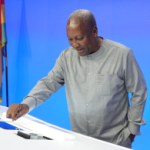
Speaking at the opening of the 132nd Monetary Policy Committee meeting on September 23, Governor Dr Johnson Asiama said a projected current account deficit, the decline in reserves and a pause in GoldBod’s gold exports since mid-August required close monitoring.
He said the risks were particularly important ahead of the usual increase in foreign-exchange demand in the fourth quarter.
“Rebuilding reserves will be a key priority for the Bank in the coming months,” Dr Asiama said.
The Governor’s comments come despite GoldBod reporting that it generated US$1.315 billion in foreign exchange in August under a new financing model.
Of that amount, US$646.59 million was made available to the Bank of Ghana for reserve accumulation, while US$668.21 million was sold to commercial banks through spot sales and funded forward arrangements.
The developments leave the Monetary Policy Committee weighing the implications of the weaker reserve position alongside inflation, exchange-rate stability and economic growth.
The Bank’s concern is that continued pressure on external buffers could become more significant if foreign-exchange demand rises in the coming months.
As of the end of August, gross international reserves stood at US$11.07 billion, equivalent to 4.2 months of import cover. The figure had risen further to US$12.05 billion by September 22, according to the latest reported data.