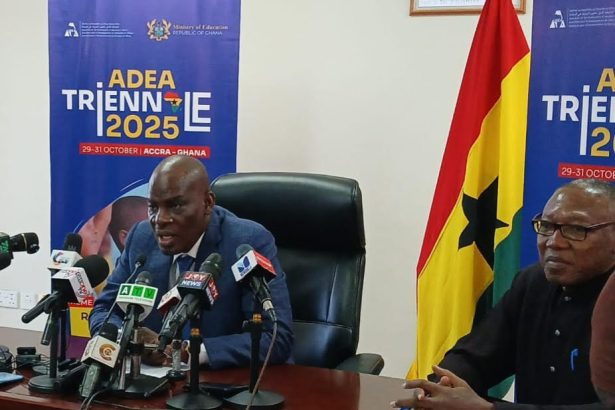
Ghana is preparing to introduce Artificial Intelligence (AI) learning tools in major local languages as part of a broader digital education strategy aimed at expanding access and improving learning outcomes nationwide.
The Minister for Education, Haruna Iddrisu, disclosed this following high-level engagements with officials of global technology giant Google at the ongoing Generative AI Summit in the United Kingdom.
In a Facebook post on Friday, 23 January 2026, the minister said he had held discussions with Google’s Vice President on how emerging AI technologies could be adapted to address education gaps in Ghana and across Africa.
“Yesterday, I had a fruitful engagement with the Vice President of Google, where ideas were shared to improve quality education in Ghana and Africa as a whole,” Mr Iddrisu stated.
The initiative forms part of Google’s $37 million investment in Africa and includes the development of speech recognition systems and AI-powered educational tools in Ghanaian languages such as Twi, Ewe and Dagbani.
More Read
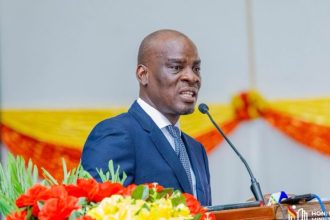
According to the minister, the technology is also being designed to recognise non-standard speech patterns, a move expected to make digital learning more inclusive, particularly for learners in rural communities and persons with disabilities.
Mr Iddrisu further revealed that government has proposed the inclusion of Hausa in the project, citing its widespread use across Ghana and West Africa as critical for broader regional impact.
“The deployment of AI in local languages will help ensure that all learners, including those in rural communities or with disabilities, can access educational resources effectively,” he said.
Beyond language inclusion, the Education Minister announced that Google has assured government that the educational tools would be deployed in Ghana on a zero-rated basis, meaning students would be able to access the platforms without incurring data costs.
The package is expected to include curriculum-aligned content as well as resources on the responsible use of AI in teaching and learning, an area increasingly attracting global policy attention.
The partnership also extends beyond government and Google. Institutions such as the University of Ghana and GDI Hub are expected to play key roles in advancing research into local-language AI development.
This collaboration could position Ghana as one of Africa’s leading centres for inclusive digital education innovation.
“Ghana is not just participating in the AI revolution, we are helping to shape it for Africa,” Mr Iddrisu stated.