By Patrick Biddah
Ghana’s Health Minister , Kwabena Mintah Akandoh, has announced the introduction of six post-basic nursing programmes aimed at strengthening specialized healthcare delivery across the country.
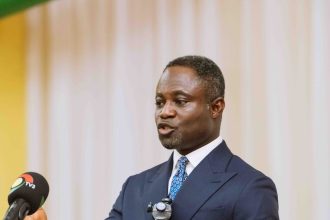
Speaking at the inauguration of the advisory boards of health training institutions, the Minister said the initiative forms part of a broader strategy to reform and modernize Ghana’s health professional education system.
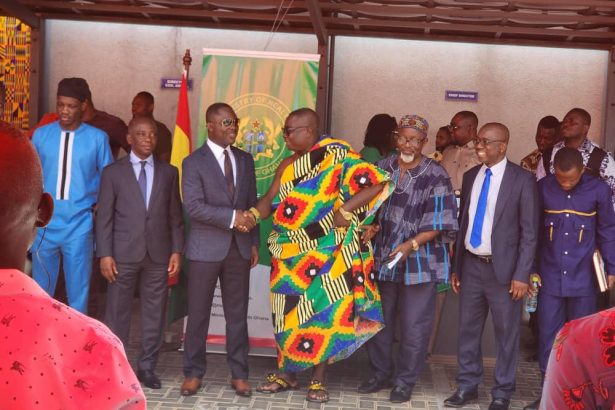
The nationwide exercise, held simultaneously in Accra, Kumasi, and Tamale, underscores government’s commitment to improving governance, quality, and strategic direction in nursing and midwifery training colleges.
Hon. Akandoh emphasized that while infrastructure and medical supplies remain essential, the quality of healthcare ultimately depends on the competence of health professionals trained within the system.
More Read
He noted that Ghana’s health training institutions play a critical role in shaping the future of healthcare delivery, stressing the need for strong leadership, sound governance, and long-term planning.
The Minister revealed that the government is shifting its focus from merely expanding the number of training institutions to developing specialized skills among health workers.
Central to this policy direction is the introduction of six post-basic Bachelor of Science programmes in specialized nursing fields.
The programmes include cardiology nursing, critical care nursing, endocrinology nursing, nephrology nursing, oncology nursing, and emergency nursing.
According to Hon. Akandoh, some of these programmes are being introduced for the first time in Ghana, while others are being expanded to meet increasing demand for specialist healthcare services.
He explained that the initiative is being implemented in collaboration with the Ghana Medical Trust Fund and the University of Cape Coast, with pilot programmes already underway in selected institutions, including Korle Bu, Komfo Anokye, and Tamale.
The Minister noted that the move aligns with government’s efforts to address the rising burden of non-communicable diseases and the growing need for emergency and specialized care.
He further indicated that health training institutions would be expected to scale up these programmes to advanced levels, including membership and fellowship training.
Hon. Akandoh added that the initiative also responds to international demand for Ghanaian health professionals, as several countries have requested specialists in specific nursing fields under ongoing bilateral agreements.