Ghana has activated a biometric tracking system aimed at strengthening border control while improving the movement of people and goods across its frontiers, as part of broader efforts to support continental trade integration.
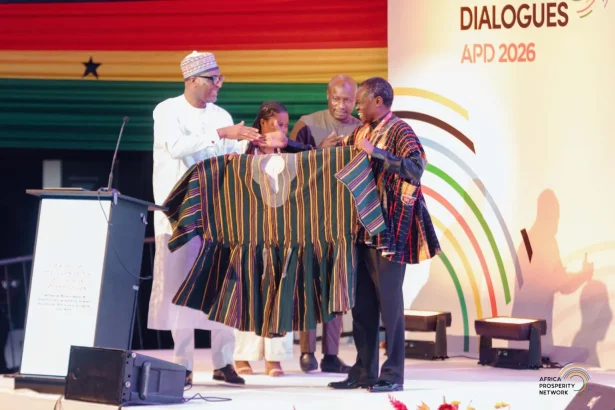
The new system was disclosed by the Minister of the Interior, Muntaka Mohammed-Mubarak, during a keynote address at the Africa Prosperity Dialogues 2026 held at the Accra International Conference Centre on Thursday, 5 February.
The Interior Minister underscored the urgency of replacing traditional border control methods with intelligence-driven systems capable of addressing modern security threats without disrupting lawful trade under the African Continental Free Trade Area (AfCFTA).
“Without security, trade cannot flourish, and without orderly mobility, integration cannot succeed,” he said, adding that Africa’s borders should serve as conduits for growth rather than obstacles to economic progress.
He outlined Ghana’s border management challenges, noting that while the country operates 48 approved entry points, more than 250 unapproved crossings remain vulnerable to exploitation by criminal networks involved in trafficking, terrorism and illicit trade.
More Read
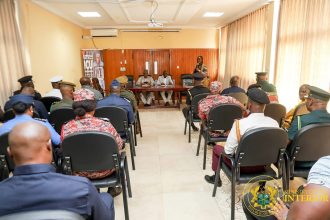
To confront these risks, the government has introduced biometric passenger monitoring technology that captures and analyses traveller data before entry. The system, which became operational in November 2025, enables authorities to identify individuals boarding flights and their seating details prior to arrival.
Plans are underway to extend the technology to land and maritime borders to ensure that enforcement actions are guided by intelligence and risk profiling, rather than indiscriminate checks that impede lawful movement.
The Minister also drew attention to the difficulties faced by small and medium-sized enterprises, particularly women- and youth-led businesses, citing delays, harassment and administrative bottlenecks at border points as major constraints to intra-African trade.
He attributed these challenges to non-tariff barriers, excessive paperwork and fragmented enforcement regimes that undermine the objectives of AfCFTA.
In response, the Interior Ministry is collaborating with the Ministry of Trade, customs authorities and security agencies to streamline border procedures, introduce transparent grievance systems and strengthen cross-border cooperation.
“Regional cooperation, such as harmonised protocols and one-stop border posts, has already shown promise in reducing delays and corruption,” he said, stressing the need for joint border operations and intelligence sharing among African states.
Mr Muntaka further advocated the establishment of a continental biometric identity framework under the African Union to link national digital identification systems to a unified standard.
“A borderless Africa does not mean borderless security; it means smart borders,” he said, noting that effective mobility must be technology-driven, accountable and secure.