By Benjamin Makafui Attipoe, Adaklu Tsriefe
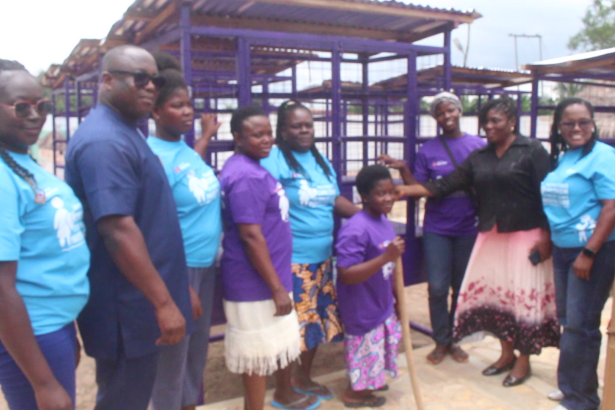
Friends of Adaklu (FOA), a volunteer-run Non-Governmental Organisation (NGO), has donated livelihood equipment and grants to 252 caregivers in the Adaklu District of the Volta Region as part of efforts to strengthen household incomes and improve the welfare of children under their care. The beneficiaries, drawn from the Adaklu Goefe, Adaklu Waya, Adaklu Wumenu, Adaklu Abuadi and Kodzobi electoral areas, received various income-generating equipment, including industrial sewing machines, deep freezers, steaming irons, cassava and pepper grinding machines, standing dryers, ice chests, stabilisers, tables with shades, cylinders and other items.
The support forms part of the five-year SOS and Norwegian Agency for Development Cooperation (NORAD) Project, titled “Protecting Children at Risk of Losing Parental Care,” being implemented by Friends of Adaklu (FOA) in partnership with SOS Children’s Villages Ghana and funded with support from NORAD and the Government of Norway.
Speaking at a handover durbar at Adaklu Tsriefe, the Country Director of Friends of Adaklu (FOA) and the Programme Manager of the NORAD Project, Ms. Stella Kudah, said the intervention was aimed at economically empowering caregivers to become more self-reliant and better able to meet the needs of their households, particularly children in their care.
She said in 2025, 187 caregivers received grants while nine others received equipment and grants. This year, she said, 204 caregivers had received grants, while another 48 had been supported with livelihood equipment and grants. According to Ms. Kudah, the interventions have brought to 500 the total number of caregivers who have so far benefited from either grants or equipment and grants under the project.
She said the beneficiaries had also received training in financial and business management, literacy and numeracy, positive parenting, alternative income-generating activities, as well as mental health and health screening. The caregivers had further benefited from the renewal of their National Health Insurance Scheme (NHIS) cards.
Ms. Kudah said the project was also directly supporting about 3,000 children with educational materials, school uniforms and sanitary pads, while Child Rights Clubs had been established in schools. She added that child protection structures had also been established and strengthened at both community and district levels to help safeguard children.
The five-year project, which began in 2025 and is expected to run until 2029, provides for additional grants to caregivers who demonstrate improvement in their businesses to enable them to expand their activities.
The District Director of Education for Adaklu, Mr. Mac Peter Dumatonu, commended the NGO and its partners for extending their intervention beyond the classroom to address household-level challenges affecting children’s education. He described the equipment as “a seed for your economic development” and urged the beneficiaries to nurture it well so that it would translate into improved livelihoods and better school attendance, retention and learning outcomes for their children. “When the home is strengthened, the school thrives,” he said.
Mr. Dumatonu said poverty and other challenges at the household level could undermine children’s education, stressing that supporting families was therefore an essential part of promoting inclusive and equitable education. He assured the organisers of the Directorate’s cooperation in monitoring and sustaining the gains of the project.
The District Chief Executive (DCE) for Adaklu, Hon. Jerry Yao Ameko, also praised FOA, SOS Children’s Villages Ghana and the Norwegian Government for the intervention. He said the support would positively impact the lives of both caregivers and children and commended FOA for its commitment to child protection.
Hon. Ameko pledged the Assembly’s support towards achieving the objectives of the project. He reminded parents and guardians of their responsibility to provide for the welfare and upbringing of their children and urged beneficiaries not to allow the donated equipment to become “decorative machines” but to put them to productive use to improve their livelihoods.
The National Youth Development Advisor of SOS Children’s Villages Ghana, Mr. Godknows K. Kporha, disclosed that the project was being implemented in four regions of Ghana. The beneficiary areas, he said, were Ada in the Greater Accra Region, Ekumfi in the Central Region, Sene West in the Bono Region and Adaklu in the Volta Region. He described the selection of the four project electoral areas in Adaklu as an opportunity that should be embraced fully by the beneficiaries and other stakeholders.
Mr. Kporha explained that although the project was scheduled to run for five years until 2029, the possibility of an extension would depend largely on how beneficiaries and stakeholders conducted themselves and adhered to the project’s implementation guidelines.
The Regional and District Directors of Social Welfare and Community Development, Mrs. Stella Mawusi Agbezuhlor-Mawutor and Ms. Susan T. Akortia, respectively, also urged beneficiaries to become ambassadors of the project and ensure that its benefits translated into tangible improvements in their families and communities.
Some beneficiaries, who spoke to the media, expressed appreciation to FOA, SOS Children’s Villages Ghana and the Norwegian Government for the support. They described the intervention as a dream come true and pledged to use the equipment productively to improve their economic circumstances and enhance the welfare and education of the children under their care.
The intervention forms part of broader efforts to strengthen families, prevent children from losing parental care and create a supportive environment in which vulnerable children can remain in school and develop their full potential.
FOA is a 100 percent volunteer-run Non-Governmental Organization (NGO) that works to build self-reliance and sustainable solutions in the Adaklu District of the Volta Region. Its core focus areas and projects include Education and Digital Inclusion, Heathcare Provision, Food and Economic Security as well as Community Welfare.