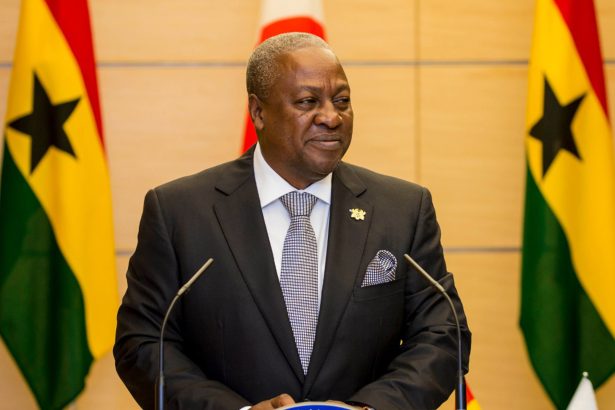
President John Dramani Mahama is scheduled to deliver the 2026 State of the Nation Address (SONA) in Parliament today, Friday, 27 February, marking the second such address since his return to the Presidency last year.
The address is a constitutional requirement under Article 67 of the 1992 Constitution, which mandates that the President attend Parliament at the beginning of each session to deliver a message on the state of the nation.
In today’s address, President Mahama is expected to present a comprehensive assessment of the country’s current condition, review progress made over the past year, and outline his government’s key priorities and major policy directions for 2026.
Critical sectors, including the economy, security, health, education, agriculture and infrastructure, are anticipated to feature prominently. Observers also expect reflections on Ghana’s international relations and its commitments on the global stage.
Ahead of the address, education policy think tank Africa Education Watch (Eduwatch) has outlined a set of expectations, urging President Mahama to provide a detailed account of how the government’s education allocation has been utilised over the past year.

In a press statement issued on Thursday, 26 February, Eduwatch called on the President to prioritise accountability in his second SONA.
The organisation recalled that during the 2025 SONA, President Mahama unveiled what it described as an ambitious vision for the education sector, anchored on 41 initiatives and major reforms aimed at transforming teaching and learning outcomes over the course of his tenure.
According to Eduwatch, the upcoming address presents a critical opportunity to demonstrate transparency in the implementation of those reforms.
“One year after implementing a full budget cycle with a significant allocation of GH¢42.1 billion to education in 2025, Eduwatch expects His Excellency to provide an account of how the funds have been applied in pursuit of his outlined vision for education and the key accomplishments and outcomes that have emerged in the past year, while acknowledging challenges and mitigation strategies to strengthen policy and budgetary efficiency and effectiveness,” the statement said.
The think tank further urged the President to openly acknowledge the challenges encountered in executing the reforms and to outline concrete mitigation strategies to enhance policy delivery and improve efficiency in the use of public funds.
Beyond accountability for past expenditure, Eduwatch identified teacher recruitment and deployment as a priority area requiring urgent attention in 2026.
It expressed concern that the failure to recruit teachers during the 2025 financial year has exacerbated staffing gaps, particularly in underserved basic schools across deprived and rural districts.
According to the organisation, many of these communities were already grappling with severe teacher shortages prior to 2025, and the absence of new recruitment has deepened the crisis, potentially undermining efforts to improve learning outcomes nationwide.