The recent clarification by the Ghana Revenue Authority (GRA) on an earlier announcement by the Ghana Customs Division that passengers carrying more than two mobile phones may be required to pay customs duty, has reopened a conversation that many Ghanaians travelling into the country would rather forget.
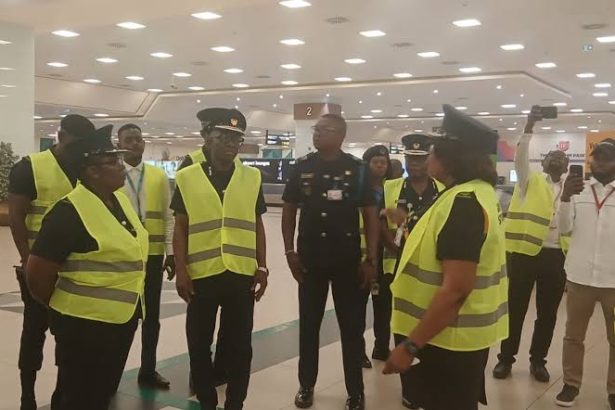
Over the years, many travellers have complained about their experiences with some officials at the Accra International Airport (AIA), including allegations of being pressured to part with money before being allowed to proceed with their belongings. In some instances, these encounters have reportedly amounted to harassment.
Against this background, leaving the decision on whether a traveller should pay import duty on additional mobile phones to the discretion of individual Customs officers, raises serious concerns. Such discretion, without clear and transparent guidelines, could create opportunities for abuse and expose travellers to extortion and arbitrary demands.
It is difficult to understand what significant economic benefit the proposed measure would bring to the country, particularly when travellers entering Ghana already pay taxes and comply with several other charges and requirements. How much revenue can realistically be generated from taxing a traveller who arrives with more than one mobile phone, and is that revenue substantial enough to justify creating another avenue for possible abuse?
This is yet another example of how, in our attempt to solve one problem, we sometimes create several others. Rather than introducing measures that could make frontline officials more susceptible to corruption and inducement, the authorities should focus on plugging existing leakages within the public sector.

Every year, deliberations of Parliament’s Public Accounts Committee (PAC) of Parliament expose millions of Ghana cedis lost through procurement breaches, financial mismanagement, irregular expenditure and other forms of abuse. If even half of these leakages could be eliminated, the savings to the state would far exceed whatever revenue may be generated from imposing duties on travellers carrying an additional mobile phone.
What Ghana needs is not more opportunities for discretionary taxation at the borders, but stronger systems, clearer rules and greater accountability. If customs duties are genuinely applicable to certain categories of goods brought into the country, the rules should be unambiguous, publicly accessible and uniformly applied.
The last thing the country needs is a policy that creates another point of friction between travellers and Customs officials, while providing room for arbitrary enforcement.
The government must therefore reconsider this approach and ensure that efforts to raise revenue do not inadvertently create fertile ground for corruption and extortion. Ghana’s revenue mobilisation efforts should target the major leakages in the system, rather than burdening ordinary travellers with measures whose economic benefits remain questionable.