


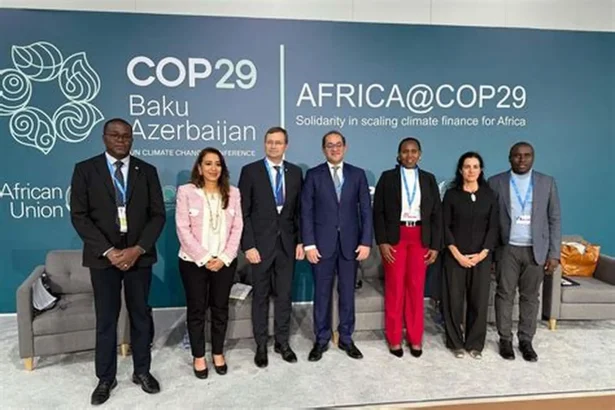
When global leaders and climate negotiators converged in Baku, Azerbaijan, last November for COP29, the stakes couldn’t have been higher. For Ghana — where sea levels continue to threaten coastal homes and unpredictable rainfall challenges farmers — these global discussions were more than politics; they were about survival and opportunity.
One of the biggest headlines from COP29 was the new pledge to raise annual global climate finance to $300 billion by 2035. This new goal, announced after tense negotiations, was designed to replace the much-criticised $100 billion annual target that wealthy countries repeatedly missed.
Ghana’s Minister of Finance, Dr Mohammed Amin Adam, welcomed the news but cautioned that “without transparent delivery mechanisms, these promises will remain just words on paper.” His concern is widely shared at home. Many past pledges failed to reach frontline communities, leaving smallholder farmers and coastal residents to fend for themselves.
Loss and Damage Fund: Relief, but far from enough
For years, Ghana and other vulnerable nations pushed for a fund to help deal with climate disasters — from floods washing away entire neighbourhoods in Accra to coastal erosion swallowing fishing villages in Ada. At COP29, the Loss and Damage Fund was finally declared operational, with about $700 million pledged initially.
While this was a symbolic win, Ghana’s climate activists described it as a “drop in the ocean” compared to the estimated billions needed annually to repair damage and strengthen local infrastructure.
“Communities don’t just need compensation; they need support to rebuild and prepare for what’s coming next,” said Chibeze Ezekiel, a Ghanaian climate advocate and leader of the Strategic Youth Network for Development (SYND), who closely followed the talks.
Carbon markets: A new economic opportunity — if done right
Perhaps one of the most forward-looking outcomes for Ghana was the finalisation of rules under Article 6 of the Paris Agreement, allowing countries to trade carbon credits. Ghana has already signed deals with Switzerland and Sweden, setting it up to earn revenue by reducing emissions through renewable energy projects and sustainable agriculture initiatives.
But here, too, caution is key. Experts warn that if governance isn’t strong, these markets can easily be exploited, with little benefit trickling down to the people clearing mangroves or installing clean cookstoves.
“The potential is huge,” says Dr Kwaku Afriyie, Minister for Environment, Science, Technology and Innovation. “But we must make sure that it empowers communities and supports real environmental gains — not just quick cash for middlemen.”
At COP29, Ghana announced plans to scale up its meteorological capacity, including 26 new weather stations and a significant recruitment drive at the Ghana Meteorological Agency. This investment is vital, as the country has experienced repeated floods that could have been mitigated with better forecasting.
The move is part of the broader “Early Warning for All” programme, designed to ensure every Ghanaian, no matter where they live, receives timely alerts to prepare for extreme weather. This commitment, supported by partners like the UN and African Union, is seen as a big step toward climate resilience.
Ghana’s Climate Prosperity Plan: Not just survival, but growth
Beyond crisis response, Ghana used COP29 to showcase its ambitious Climate Prosperity Plan — a roadmap to transform climate threats into economic opportunity. The plan outlines a vision to attract around $75 billion in green investment by 2050, targeting renewable energy, green industrial parks, and climate-smart agriculture.
Flagship ideas include the proposed Akosombo Net-Zero Industrial Park and large-scale floating solar farms on the Volta Lake. If fully realised, these initiatives could create thousands of jobs, reduce emissions, and strengthen Ghana’s position as a regional climate leader.
Can Ghana turn global promises into local progress?
While COP29 ended with a sense of cautious optimism, many in Ghana remain sceptical. The new finance pledges and carbon market opportunities are only meaningful if they translate into real, on-the-ground support.
“The test will be whether a fisherwoman in Keta or a farmer in Wa actually feels the difference in her daily life,” says Chibeze Ezekiel. “That is the real measure of success.”
For now, Ghana has laid the groundwork to move from vulnerability to resilience and prosperity. But as always, the challenge lies in turning conference declarations into concrete action — and in holding global partners accountable to their promises
.






