
The Civil and Local Government Staff Association of Ghana (CLOGSAG) has rejected a recommendation by the Constitution Review Committee seeking to grant independent status to the Controller and Accountant-General’s Department.
The association says the department should continue to operate under the administrative authority of the Ministry of Finance rather than be elevated into an autonomous constitutional office.
Speaking at a press briefing in Accra on Wednesday, CLOGSAG’s Executive Secretary, Isaac Bampoe Addo, argued that the proposed restructuring could disrupt the existing system for managing public finances.
“We disagree with the proposals to establish the Controller and Accountant-General as an independent or hybrid independent constitutional office. The mandate of the Controller and Accountant-General’s Department falls squarely within the functional oversight responsibilities of the Ministry of Finance.
“The CAGD operates as an implementation agency of the Ministry in executing government accounting, ensuring payment control and performing treasury management functions,” he stated.
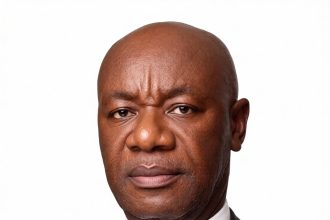
According to him, since the department plays a central role in implementing government fiscal policy, it should remain positioned within the Finance Ministry’s administrative framework.
“Elevating the Department to independent status could create institutional confusion, weaken fiscal coordination, introduce bureaucratic duplication and compromise efficient financial administration,” he cautioned.
CLOGSAG also objected to a separate proposal suggesting that the Council of State should oversee the recruitment and vetting of candidates for the position of Controller and Accountant-General before making binding nominations to the President.
“We object to the proposal for the Council of State to recruit, vet and make binding nominations to the President. This is at variance with our firm principle of leaving departmental appointments to governing councils, which possess the institutional memory to select, vet and appoint an appropriate head on merit,” he explained.
While the association expressed support for parliamentary scrutiny through relevant committees, it insisted that ministerial oversight of the department must remain with the Finance Ministry.
The association further criticised a similar recommendation concerning the appointment of the Head of the Civil Service, which would also involve the Council of State in the recruitment and nomination process.
“We object to the CRC proposal that the Council of State shall recruit, vet and make binding nominations to the President for the appointment of the Head of the Civil Service with the assistance of the Public Services Commission,” he said.
Instead, Mr Bampoe Addo proposed that the appointment process should follow existing constitutional provisions governing public service appointments.
“We recommend removing the special appointment arrangement under Article 193(1), which requires the President to appoint the Head of the Civil Service acting specifically on the advice of the Public Services Commission, and align this appointment with the general framework under Article 195 governing public service appointments,” he stated.
He cited Article 195(1) of the Constitution, which states that the authority to appoint persons to positions within the public service rests with the President, acting on the advice of the relevant governing council in consultation with the Public Services Commission.
CLOGSAG further suggested an amendment to Article 195 to strengthen professionalism and merit-based appointments by ensuring nominations come from governing councils in consultation with the Public Services Commission.