Africa’s push to create a unified digital marketplace has moved from policy discussions to implementation, with the African Continental Free Trade Area (AfCFTA) Secretariat adopting a roadmap to accelerate digital trade across the continent.
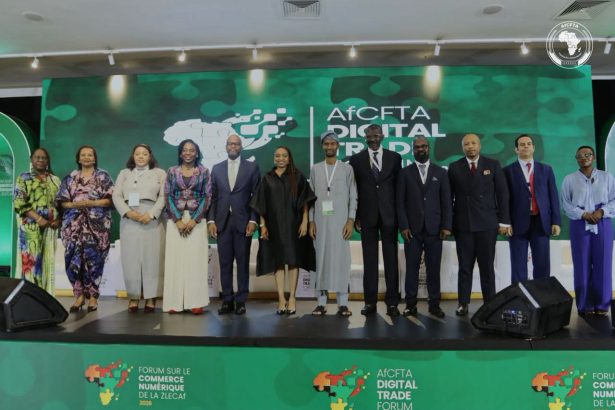
The move follows the conclusion of the second AfCFTA Digital Trade Forum in Lagos, Nigeria, where policymakers, regulators, entrepreneurs, investors and development partners agreed on eight key actions aimed at turning Africa’s digital trade ambitions into reality.
Held under the theme “Digital Trade for a Connected African Market,” the forum focused on translating the recently adopted Protocol on Digital Trade into practical systems that will support cross-border payments, data exchange and online commerce.
The AfCFTA Secretariat said the success of the digital trade framework would not be determined by its adoption alone, but by how effectively it improves opportunities for African businesses and citizens.
Africa’s digital economy, currently valued at about US$180 billion, is projected to grow significantly in the coming decades, creating pressure for governments to establish systems that allow businesses to trade seamlessly across borders.
More Read

The eight-point roadmap calls on African countries to accelerate the ratification and domestication of the Protocol on Digital Trade, strengthen digital infrastructure and modernise cross-border trade systems through electronic processes and paperless transactions.
It also prioritises cybersecurity, consumer protection, responsible data governance, digital inclusion and increased investment to help scale African innovations.
The roadmap further highlights the need for stronger public-private partnerships and secure, interoperable payment systems that allow money to move more easily across African markets.
Already, efforts are underway to support businesses to participate in the digital economy. The Secretariat cited the AfCFTA Digital Inclusion and Entrepreneurship Programme (ADIEP), which, in partnership with Google, is training 7,500 small and medium-sized enterprises across 19 countries in digital trade, cloud technology and artificial intelligence tools.
The Pan-African Payment and Settlement System (PAPSS) was also highlighted as one of the initiatives helping reduce barriers associated with cross-border payments.
A major outcome of the forum was the signing of a Memorandum of Understanding between the AfCFTA Secretariat and Quest Ghana Limited to develop a Digital Trade Corridor aimed at facilitating, tracking and settling cross-border transactions under AfCFTA rules.
Secretary-General of the AfCFTA Secretariat, Wamkele Mene, said digital trade presents an opportunity to bring more African women, young people and rural communities into the formal economy.
He emphasised that harmonised regulations, reliable connectivity, trusted data systems and digital skills would be critical to building a competitive continental digital economy.
“We are ready to take responsibility for our own destiny as Africans—to advance Africa’s digital economy—with the support of our partners across the world,” he said.
Nigeria’s Minister of Industry, Trade and Investment and Chair of the AfCFTA Council of Ministers Responsible for Trade, Jumoke Oduwole, reaffirmed Nigeria’s commitment to advancing the implementation of the Protocol on Digital Trade.
The AfCFTA Secretariat said the next phase would require African governments to integrate digital trade into national development and trade strategies to ensure that continental commitments translate into measurable action.