As part of efforts for citizens to honour their tax obligations and to promote transparency in the dealings of the District Assembly, the Ada West District Office of the National Commission for Civic Education (NCCE) has educated residents on tax obligations, Act 936, and the functions of the Public Relations Complaints Committee (PRCC).
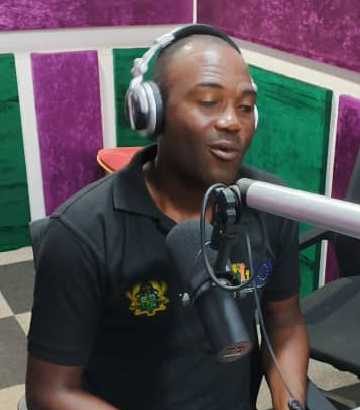
The engagement took place during the afternoon radio programme dubbed; “Time With The Assembly” on Sege-based Okoli FM, where the Ada West District Director of the NCCE, Samuel Etsey, took listeners through key civic responsibilities expected of citizens under the Local Governance framework.
Mr. Etsey charged residents to take their tax obligations seriously, explaining that tax payment remains a critical source of revenue for District Assemblies to implement development projects such as schools, health facilities, roads, sanitation, and water systems.
He stressed that failure to pay taxes undermines local development and slows down the provision of essential social services. According to him, taxation is not optional but a civic duty enshrined in law, and every eligible citizen is required to contribute their fair share.
Mr. Etsey further outlined the legal implications of tax evasion, noting that individuals or businesses that deliberately evade taxes may face penalties, fines, interest charges on unpaid amounts, and possible legal prosecution under Ghana’s revenue laws.
He added that enforcement agencies such as the Ghana Revenue Authority are mandated to ensure compliance.
Turning to Act 936, Mr. Etsey educated listeners on the Local Governance Act, 2016 (Act 936), explaining that it provides the legal framework for the administration of District Assemblies and decentralized governance in Ghana.
He highlighted that the Act empowers Assemblies to mobilize revenue and promote participatory development at the local level.
He also gave a detailed explanation of the Public Relations and Complaints Committee (PRCC), noting that the Committee plays a key role in strengthening accountability at the district level.
Mr. Etsey explained that the PRCC is responsible for educating the public on the activities of the District Assembly, promoting transparency in governance, and investigating complaints against the District Chief Executive, Assembly Members, and staff of the Assembly.
Mr. Etsey added that the Committee also addresses issues of administrative injustice, abuse of office, and failure of duty by public officials, while making recommendations for corrective action. He, however, reminded residents that the PRCC cannot investigate cases already before the courts or the Commission on Human Rights and Administrative Justice (CHRAJ).
The programme generated strong interest among listeners, with several callers phoning in to ask questions and contribute to the discussion.
Many sought clarification on tax processes, penalties for non-compliance, and how they could formally lodge complaints through the PRCC mechanism.
Mr. Etsey responded to the questions live on air, encouraging continuous civic engagement and urging residents to actively participate in local governance processes.
He described radio platforms as vital tools for civic education, especially in bridging the gap between the Assembly and the public.