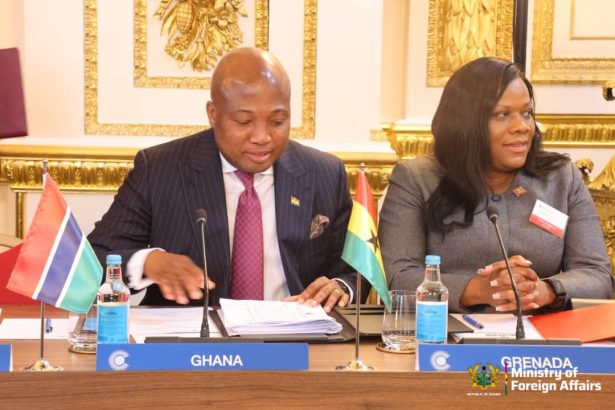
Ghana has called on the Commonwealth of Nations to prioritise the reduction of tariffs and other trade barriers among its member states to strengthen economic cooperation and unlock new trade opportunities.
Speaking at the 26th Commonwealth Foreign Affairs Ministers Meeting in London, the Minister for Foreign Affairs, Samuel Okudzeto Ablakwa, urged member countries to position the Commonwealth as a multilateral bloc that promotes open trade and economic diplomacy rather than protectionist policies.
The meeting was held under the theme “The Commonwealth at a Moment of Strategic Opportunity.”
Mr Ablakwa said the organisation had the potential to distinguish itself on the global stage by facilitating freer trade among its 56 member states.
“Ghana commends the Commonwealth for the reforms that have been well outlined,” he said.
More Read
According to the minister, the Commonwealth should take deliberate steps to remove tariff regimes and other restrictions that limit trade flows between member countries.
“We must present the Commonwealth as a different multilateral organisation that does not believe in tariff wars,” Mr Ablakwa stated.
He stressed that reducing trade barriers would allow member states to maximise economic opportunities and strengthen partnerships across regions.
“We should remove trade barriers and ensure that we enhance our fortunes as we pursue economic diplomacy,” he added.
Mr Ablakwa also highlighted Ghana’s strategic role in promoting broader trade integration, noting that the country hosts the secretariat of the African Continental Free Trade Area in Accra.
The AfCFTA seeks to create the world’s largest free trade area by the number of participating countries, with the aim of boosting intra-African trade and accelerating economic growth across the continent.
He said Ghana’s experience with continental trade integration could serve as a useful model for strengthening economic ties within the Commonwealth.
The minister emphasised that deeper economic cooperation and reduced tariffs among Commonwealth nations would help unlock new markets, increase trade volumes and promote shared prosperity among member states.