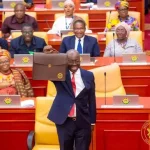



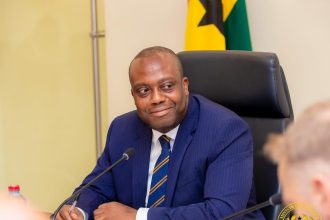
Finance Minister Dr Cassiel Ato Forson is expected to outline the government’s strategy for mobilising US$10 billion for its New Economy programme when he presents the 2027 Budget Statement and Economic Policy to Parliament today, Thursday, November 12.
The presentation, scheduled for 6:00 pm, will set out the government’s fiscal priorities and economic policy direction for 2027 as it seeks to consolidate recent gains and drive investment, production and job creation.
The proposed New Economy programme, announced by President John Dramani Mahama, is intended to mobilise US$10 billion over four years, from 2027 to 2030.
It is aimed at transforming Ghana into a productive, competitive, diversified, technology-driven and inclusive economy by strengthening local industries, adding value to natural resources and expanding opportunities for businesses and young people.
The programme identifies commercial agriculture and agribusiness, energy, critical minerals and value addition, textiles and garments, tourism, the creative economy and pharmaceutical manufacturing as strategic areas for investment.
The 2027 Budget is expected to provide details on the funding arrangements, the role of private investors and how the government intends to ensure that investments produce measurable economic benefits.
The government’s decision not to rely on expensive borrowing from the international capital market to finance the programme is expected to bring domestic resource mobilisation and private-sector investment into sharper focus.
Beyond the New Economy agenda, Dr Forson is expected to present an account of Ghana’s economic performance in 2026 and outline measures relating to inflation, economic growth, public debt, revenue collection, government expenditure and foreign reserves.
The economy grew by 6 per cent in real terms in the second quarter of 2026, above the government’s annual growth target of 4.8 per cent.
Inflation declined significantly earlier in the year, reaching 3.2 per cent in March, before rising for three consecutive months to 5.5 per cent in October.
Gross international reserves were recorded at 4.2 months of import cover in August 2026, exceeding the minimum target of three months.
The budget comes as government faces expectations to translate macroeconomic improvements into stronger economic activity and better living conditions.
Businesses, organised labour, civil society groups and economic analysts are expected to assess the proposed allocations, particularly in relation to domestic revenue mobilisation, expenditure controls, arrears clearance and debt sustainability.
The implementation of flagship programmes and the adequacy of funding for critical sectors are also likely to feature in parliamentary scrutiny.
The government will be expected to demonstrate how its spending and investment plans will generate employment, improve public services, expand infrastructure and create conditions for businesses to grow.
The budget is therefore expected to provide a clearer account of how the government’s economic recovery agenda will move from stabilisation to production, industrial expansion and broader economic opportunities.