Spanish authorities have intercepted a massive consignment of 2.6 tonnes of cocaine concealed in two shipping containers loaded with coconuts at Ghana’s Tema Port, in yet another major international drug seizure linked to the country’s maritime export facilities.
The discovery, which has resulted in the arrest of two suspects in the Spanish city of Almería, has renewed concerns about the possible exploitation of Ghana’s ports by international drug trafficking syndicates and the effectiveness of security screening procedures for export cargo.
The operation, carried out jointly by Spain’s Guardia Civil and the Customs Surveillance Service of the Spanish Tax Agency, took place in August 2026, but details were officially released on Wednesday, November 11.
According to information released by the Spanish authorities, the two containers were loaded at Tema Port on August 2, 2026, and arrived at the Port of Valencia in Spain approximately 20 days later.
The containers, which were declared as carrying coconuts, were selected for inspection after customs officials identified them as matching a high-risk profile associated with international narcotics trafficking.
More Read

A thorough examination of the cargo revealed that the wooden crates containing the coconuts had been specially modified with false bottoms designed to conceal packages of cocaine.
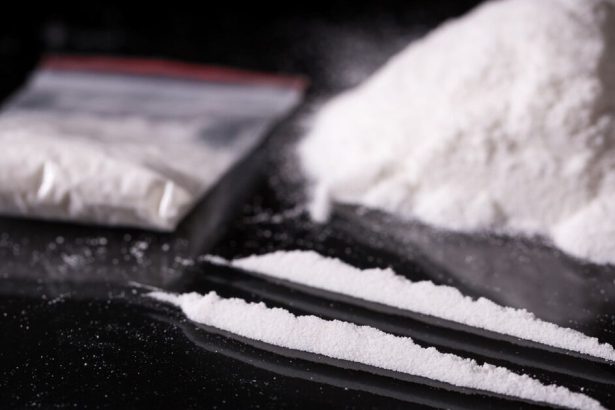
Officers discovered numerous packages containing a white powdery substance, which subsequent laboratory tests confirmed to be cocaine.
The total quantity of the illicit substance recovered was approximately 2.6 tonnes, making the interception another significant drug seizure involving cargo shipped from Ghana.
Rather than immediately arresting those connected to the shipment, Spanish investigators adopted a surveillance strategy aimed at identifying the individuals responsible for receiving and distributing the drugs.
After removing the cocaine, officers resealed the containers and allowed arrangements for their collection to proceed under close surveillance.
Two refrigerated lorries subsequently arrived to collect the cargo, which was transported from Valencia to a warehouse at the La Juaida industrial estate in Almería.
Investigators followed the vehicles to the warehouse, where officers moved in as unloading operations commenced.
Two men, identified as the importer of the shipment and the individual responsible for supervising the unloading, were arrested.
The Spanish authorities have not disclosed the identities or nationalities of the suspects, nor have they indicated whether additional arrests are expected.
More significantly, the official information released so far does not establish whether the cocaine was concealed in the containers before they left Ghana or whether the consignment was tampered with at another point along the international shipping route.
There has also been no public confirmation that Ghanaian security agencies participated in the investigation or that suspects connected to the shipment have been identified in Ghana.
Nevertheless, the confirmation that the containers originated from Tema Port has once again brought Ghana’s maritime export security arrangements under scrutiny.
The latest seizure comes against the backdrop of several major international narcotics interceptions involving shipments or travellers originating from Ghana in recent months.
The incidents have heightened concerns about the country’s possible use as a transit point by international drug trafficking organizations seeking to move cocaine and other controlled substances into European and Middle Eastern markets.
Only last month, Lebanese customs authorities intercepted 46.7 kilogrammes of cocaine at Beirut’s international airport from a Syrian passenger who had travelled from Accra.
The seizure, reported on October 31, subsequently triggered investigations by Ghana’s Narcotics Control Commission (NACOC), which arrested three foreign nationals, a Syrian, a Tunisian, and a Lebanese in connection with the shipment.
The arrests highlighted the increasingly international character of investigations into narcotics trafficking networks operating through Ghana.
Before the Lebanese interception, French customs authorities had uncovered an even larger cocaine consignment at the Port of Dunkirk.
In September, approximately 3.9 tonnes of cocaine were reportedly discovered concealed in a container of plastic waste shipped from Ghana.
The French seizure attracted considerable attention because of its reported connections to an international drug trafficking network associated with notorious Dutch fugitive Jos Leijdekkers, popularly known as Bolle Jos.
NACOC subsequently announced the arrest of suspects in Ghana as part of investigations into the shipment, indicating that further arrests could follow.
The Dunkirk interception, involving cocaine reportedly valued at approximately €225 million, raised serious questions about the movement of illicit drugs through Ghana’s maritime trade infrastructure.
The latest Spanish seizure, involving another 2.6 tonnes of cocaine, adds to the growing number of major international narcotics cases involving cargo originating from Ghana.
Taken together, the Spanish and French interceptions alone account for approximately 6.5 tonnes of cocaine linked to shipments that departed Ghanaian ports.
The growing concerns are not limited to interceptions abroad.
On August 5, 2026, police in Tema seized 866 parcels of suspected cocaine concealed in sacks of gari at a warehouse within the Tema Harbour enclave, with an estimated street value of US$6.928 million. The contraband was hidden in sacks of gari and konkonte, which were being loaded into a 40-foot container on a truck with registration number WR 1118-10, destined for export.
The discovery raised further questions about the methods employed by drug trafficking syndicates to conceal narcotics among legitimate commercial goods.
The use of gari, plastic waste and now coconuts as cover for suspected or confirmed cocaine consignments illustrates the varied concealment methods encountered by law enforcement agencies.
The developments have also prompted calls for more rigorous investigations into whether international criminal networks are exploiting weaknesses in Ghana’s cargo inspection and export monitoring systems.
The opposition Minority in Parliament has previously demanded investigations into concerns about Ghana’s alleged emergence as a transit hub for international narcotics trafficking.
The latest Spanish interception is likely to intensify those demands, particularly given the substantial quantity of cocaine involved and the confirmation that the containers were loaded at Tema Port.
The Spanish operation has left several important questions unanswered, particularly concerning the circumstances under which the two containers were prepared, loaded and cleared for export from Ghana.
Among the issues requiring clarification is whether the containers underwent security screening at Tema Port before their departure on August 2.
It also remains unclear whether Ghanaian investigators have examined the original shipping documents, cargo declarations and container inspection records.
Another outstanding issue is the identity of the exporter or shipping agent responsible for the consignment and whether any Ghana-based individuals or companies are under investigation.
The involvement, if any, of Ghanaian port officials, customs personnel, or other individuals in the shipment’s movement has not been established.
The Spanish authorities have also not disclosed whether their investigation has uncovered evidence linking the consignment to any of the other major cocaine seizures involving Ghana in recent months.
There is currently no verified evidence establishing a connection between the Spanish operation and the cocaine consignments intercepted in France or Lebanon.
Nonetheless, the frequency and scale of the interceptions have raised questions about the adequacy of existing preventive measures and the need for closer cooperation between Ghanaian law enforcement agencies and their international counterparts.
The Ghana Revenue Authority’s Customs Division, the Ghana Ports and Harbours Authority, NACOC, and other security agencies play important roles in preventing the exploitation of the country’s ports for illicit trafficking.
With international criminal networks constantly adapting their methods of concealment and transportation, the latest development underscores the importance of effective cargo screening, intelligence gathering and cooperation between customs and narcotics enforcement agencies.
For now, the two suspects arrested in Spain remain the only publicly confirmed arrests in connection with the 2.6-tonne consignment.
The central question is whether investigations will eventually establish how the cocaine entered the shipping containers and whether anyone operating within Ghana’s export supply chain played a role in facilitating its movement.
Until those questions are answered, the latest interception is likely to deepen concerns about the security of Ghana’s international trade routes and the country’s vulnerability to exploitation by transnational narcotics trafficking networks.