The government has secured Cabinet approval for the establishment of a Ghana Space Agency, with the proposed legislation now at the Attorney General’s Department for drafting, the Ministry of Environment, Science, Technology and Innovation (MESTI) has disclosed.
Director of Science, Technology and Innovation at the ministry, Kwamena Essilfie Quaison, said the agency would coordinate space-related activities, support research and innovation, encourage public-private partnerships and oversee the development of Ghana’s space infrastructure.
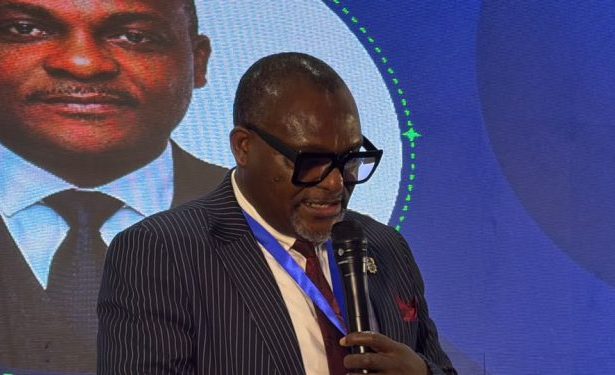
He made the disclosure on the first day of the Africa Geospatial Leadership Forum 2026, where he outlined the need for a coordinated national approach to the acquisition and use of satellite data.
Mr Quaison said government institutions currently procured and processed satellite information independently, resulting in duplicated work and additional costs.
He said the proposed agency would centralise the acquisition and processing of satellite imagery, allowing the information to be shared among several public and private sector users.
“For business, that means lower cost, consistent national baselines and data you can build on with confidence,” he said.
According to him, the Ghana Space Science and Technology Institute would be transformed into a fully fledged agency, building on the country’s existing Ghana Space Policy.
He said Ghana also needed to strengthen its domestic technical capacity to reduce dependence on foreign models used in decisions concerning its land and assets.
“It also means that some of our most important decisions about Ghanaian land and assets rest on models that were not built for Ghana,” he said.
Mr Quaison cautioned that establishing the agency would not, by itself, deliver economic gains, arguing that scientific research needed to be linked to skilled professionals and private sector activity.
“An agency does not, on its own, create value. Value is created when science, talent and enterprise come together,” he said.
He said partnerships and opportunities for local businesses and researchers would be critical to converting scientific knowledge into practical solutions and ensuring that Ghana benefits from its space ambitions.