The three pre-tertiary teacher unions have suspended their nationwide industrial action and directed members to return to the classroom today, Monday, October 12, 2026, following negotiations with the Government and the Council of State.
The decision by the Ghana National Association of Teachers (GNAT), the National Association of Graduate Teachers (NAGRAT), and the Pre-Tertiary Teachers Association of Ghana (PRETAG) follows a series of meetings on Friday with the Minister of Labour, Jobs and Employment, Emmanuel Kwadwo Agyekum, the Council of State and the Fair Wages and Salaries Commission (FWSC).
The suspension is expected to restore academic activities in first- and second-cycle institutions after nearly two weeks of disruption over outstanding promotion arrears, conditions of service, and the demand for a deprived-area allowance.
The unions’ action followed a stalemate in negotiations with the FWSC, particularly over the scope of discussions on allowances and the introduction of new benefits.
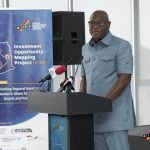
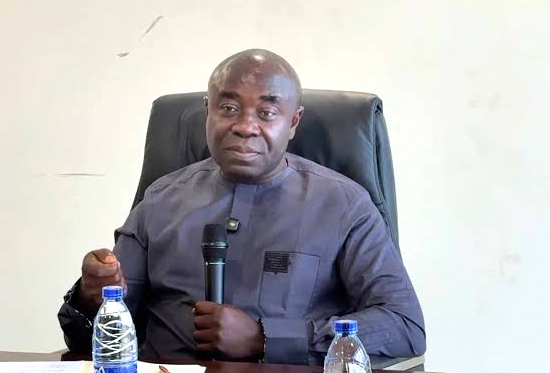
Speaking to journalists after meeting the unions at the Ministry of Labour, Jobs and Employment, Mr Agyekum said the discussions had focused on the three main issues underlying the strike: collective agreements, deprived-area allowances and promotions.
“I would say that we have had a fantastic discussion with the teacher unions,” he said.
He acknowledged that the promotion issue had proved particularly challenging because it required coordination between the Ghana Education Service (GES) and the Controller and Accountant-General’s Department (CAGD).
However, he said a team established to address the outstanding issues had made considerable progress over the preceding week.
“As of yesterday (Thursday), we had about 64,000 [teachers] that have been keyed in and confirmed by Controller,” he said, expressing optimism that the discussions would produce a positive outcome.
Meanwhile, the Ministry of Education has welcomed the unions’ decision to suspend the strike, describing it as a positive step towards resolving outstanding concerns through dialogue and constructive engagement.
In a statement, the Ministry expressed appreciation to GNAT, NAGRAT and PRETAG for their cooperation and commitment to finding a resolution in the interest of teachers and learners.
It said it remained committed to working with the unions, the FWSC and other relevant stakeholders to address outstanding issues, improve teachers’ welfare and ensure stability in the delivery of quality education.
The Ministry also commended teachers, parents, learners and other stakeholders for their patience during the industrial action.
It urged all parties to sustain the spirit of cooperation and good faith to consolidate the progress made through negotiations.
The Ministry reaffirmed its commitment to strengthening industrial harmony and creating an enabling environment in which teachers are valued, supported and empowered to contribute to Ghana’s education transformation agenda.
The suspension of the strike comes as the CAGD intensifies efforts to verify the promotion records of thousands of teachers ahead of the payment of salary adjustments and outstanding arrears.
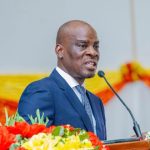
The Controller and Accountant-General, Kwasi Agyei, said the Department had received promotion input forms for 52,000 teachers from the GES, paving the way for the verification and validation of their records.
According to him, the GES had completed the submission of the required forms after processing the promotions on the Government payroll system.
The forms, together with the teachers’ promotion letters, are being reviewed by CAGD officials to establish which cases meet the requirements for payment.
Mr Agyei said the validation exercise was expected to be completed the following week, with payments targeted for October 15 or before October 16 for teachers whose records had been cleared.
He added that promotions not captured in the current payroll process would be handled through a supplementary payroll and reflected in the affected teachers’ salaries.
The dispute over promotion documentation has been a major source of tension between the CAGD, the GES and the teacher unions.
In September, the CAGD insisted that documentary evidence was necessary to prevent fictitious promotions, unauthorized salary adjustments, and irregular payments.
The Department has maintained that the requirement for completed promotion input forms and valid promotion letters is an established payroll control rather than an attempt to delay legitimate payments.
The unions, however, have expressed concern about delays in placing promoted teachers on their appropriate salary scales and paying outstanding arrears.
The strike was also fuelled by disagreements between the unions and the FWSC over the scope of negotiations on allowances.
The Chief Executive of the FWSC, Dr George Smith-Graham, had explained that the Commission’s transitional arrangement permitted negotiations to improve existing allowances for unions whose conditions of service had expired, but did not provide for comprehensive negotiations or the introduction of new allowances.
NAGRAT President Jacob Anaba, however, argued that the Commission’s negotiating mandate did not adequately cover all the issues raised by the unions.
He said the unions wanted the proposed deprived-area allowance to be considered alongside the other outstanding matters.
The disagreement contributed to the stalemate that preceded the industrial action, which began on September 25.
The FWSC had warned that teachers participating in an illegal strike could face salary deductions for the period they remained off duty. The Commission had also expressed hope that the dispute could be resolved before it escalated further.
With the unions now directing their members to resume work, attention will turn to the implementation of commitments made during the negotiations, particularly the resolution of outstanding promotion issues, the payment of arrears and further engagement on teachers’ conditions of service and allowances.
The return to the classroom is expected to provide relief to learners and parents affected by the disruption, although the lasting resolution of the dispute will depend on progress in addressing the unions’ outstanding demands.