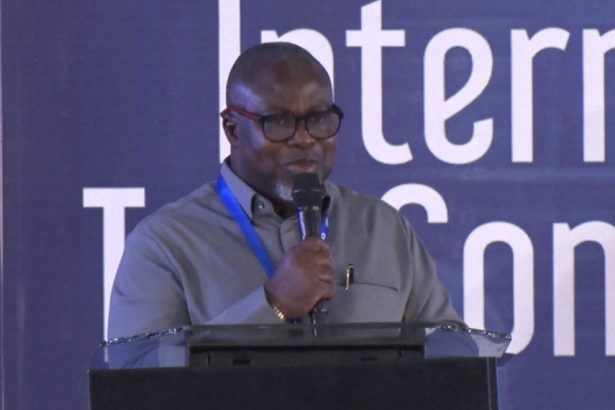
Ghana Revenue Authority (GRA) Commissioner-General, Anthony Sarpong, has called on West African countries to strengthen domestic revenue mobilisation to help close the region’s annual development financing gap of more than $100 billion.
He said countries must rely more on their own resources to finance infrastructure, social investment, climate adaptation and digital transformation, rather than depending heavily on external financing.
“The answer to our development financing question does not lie primarily beyond our borders. It lies within them in our capacity to mobilise our own domestic resources fairly, efficiently, and sustainably,” Mr Sarpong said.
He was speaking at the 8th High-Level Policy Dialogue and 23rd General Assembly of the West Africa Tax Administration Forum (WATAF) in Accra.
Mr Sarpong cited African Development Bank estimates which put the region’s annual development financing gap at more than $100 billion.
He said the financing challenge was compounded by relatively low tax mobilisation, with West Africa’s average tax-to-GDP ratio standing at about 13.5%, compared with 16.1% for Africa as a whole and approximately 20% for the West African Economic and Monetary Union convergence benchmark.
According to him, the figures indicate significant scope for countries to raise more domestic revenue.
“This gap can be closed through our own effort, that is, raising domestic revenue,” he said.
Mr Sarpong called for measures to broaden tax bases, formalise informal economic activities, improve natural resource revenue management and channel domestic savings into productive long-term investments.
He also urged tax administrations to move beyond their traditional revenue collection role and contribute more directly to building the capacity of the state.
“Tax systems are not mere instruments for collecting revenue. They are the architecture of state capacity,” he said.
However, he said efforts to improve tax compliance must be balanced with the need to maintain an environment that supports investment, entrepreneurship and private-sector growth.
Mr Sarpong further called for greater cooperation among tax administrations in the sub-region to address cross-border tax challenges, including illicit financial flows, transfer pricing, the digital economy and cross-border trade.
“No tax administration, however well-resourced, can modernise in isolation,” he said.
He also urged revenue authorities to expand their use of technology, including e-filing, electronic payments, digital invoicing, data analytics and artificial intelligence, to improve compliance, reduce leakages and make tax administration more efficient.
He identified stronger regional cooperation, technological innovation and institutional capacity as key to improving tax administration and strengthening domestic revenue mobilisation across the sub-region.