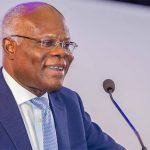
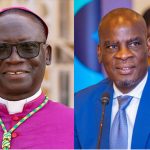
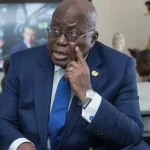
The Special Prosecutor, Kissi Agyebeng, has surprisingly named former Power Minister Kwabena Donkor and four other Ghanaian officials as persons of interest in the AKSA bribery scandal.
However, the list does not include the names of any Members of Parliament, serving or former, despite a US court report stating that emails belonging to Asante Kwaku Berko suggested that some MPs were among those who collected bribe money intended to facilitate the Turkish power deal.
The other persons named are Francis Rockson Kwasi Dzata, a former Technical Adviser to the Minister of Power; Solomon Adjetey Sowah, a former Deputy Director at the Ministry of Power; George Nii Mettle, a director of Tricorp Group Limited; and Baffour Ankomah Brobbey, an employee of the company.
On August 6, 2026, a federal jury in Brooklyn, New York, convicted Asante Kwaku Berko, a dual citizen of Ghana and the United States, and a former Managing Director of Tema Oil Refinery (TOR) and former Executive Director in the Investment Banking Division of US-based Goldman Sachs, of conspiring to pay and paying more than $1 million in bribes between 2014 and 2015 to multiple Ghanaian officials.
The payments were allegedly made in connection with the development and financing of a power plant in Ghana under a deal between the Republic of Ghana and Aksa Enerji Uretim A.S., a Turkish energy company and Goldman Sachs client.
US prosecutors highlighted an email in which an associate used the code phrase “holy rain” to refer to pending illicit payments.
Speaking at a press conference on Wednesday, August 26, 2026, Mr Agyebeng said the Office of the Special Prosecutor (OSP) had been investigating the Ghanaian dimension of the case despite its public silence on the matter.
“As I stated earlier, we have been carefully investigating the Ghana dimension, and our public silence has not meant inaction. Our involvement with the case and the evidence so far enable us to identify the following as the main persons of interest in this case,” he said.
He named Mr Donkor, who was the Minister of Power at the time; Mr Dzata, who was the Technical Adviser to the Minister of Power; Mr Sowah, who was the Deputy Director at the Ministry of Power; Mr Mettle, who was a director at Tricorp Group Limited; and Mr Brobbey, who was an employee of Tricorp Group Limited.
According to Mr Agyebeng, the investigation also covers some current and former employees of the Volta River Authority (VRA), Ghana Grid Company Limited (GRIDCo), Electricity Company of Ghana (ECG), Public Utilities Regulatory Commission (PURC), and the entity formerly known as the Ministry of Power.
“Other persons of interest include some present and former employees of Volta River Authority, Ghana Grid Company Limited, Electricity Company of Ghana, Public Utilities Regulatory Commission, and some staff of the entity formerly known as the Ministry of Power,” he said.
The Special Prosecutor, however, cautioned against treating the persons of interest as suspects, stressing that the two classifications were distinct.
“Please bear in mind that the person of interest is not necessarily a suspect. The two categories of person of interest and suspect are distinct in investigative classifications and should not be treated as interchangeable,” he explained.
He further stressed that being identified as a person of interest or a suspect did not amount to a finding of guilt.
“Identification in either category does not constitute criminal culpability or conviction until guilt is proved beyond a reasonable doubt to the satisfaction of a court of competent jurisdiction,” Mr Agyebeng said.
He urged the media and the public to exercise caution in how they reported on and treated the individuals named in the investigation.
According to the United States Department of Justice, Mr Berko was convicted by a federal jury in Brooklyn on all counts of an indictment charging him with conspiracy to violate the Foreign Corrupt Practices Act (FCPA), violating the FCPA, and conspiracy to commit money laundering.
The verdict followed a nine-day trial before United States District Judge Diane Gujarati.
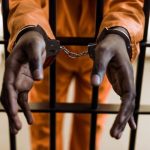
Mr Berko faces up to 30 years in prison when sentenced and was ordered to remain in custody pending sentencing.
Joseph Nocella Jr, United States Attorney for the Eastern District of New York; A. Tysen Duva, Assistant Attorney General of the Justice Department’s Criminal Division; and James C. Barnacle Jr, Assistant Director in Charge of the Federal Bureau of Investigation’s New York Field Office, announced the verdict.
“Today’s verdict marks another significant victory in this Office’s longstanding commitment to rooting out corruption,” Mr Nocella said.
“The defendant abused his access to high-level foreign government officials and his platform as an investment banker at a prestigious American firm to line his own pockets with millions of dollars.”
Mr Duva said the case demonstrated the US Government’s determination to tackle corruption involving American companies and financial institutions.
“This defendant corrupted that fair competition. He abused his position at a world-renowned American investment bank by helping bribe Ghanaian officials, so he and his co-conspirators, including senior executives at a Turkish company, could make money,” he said.
Mr Barnacle said the verdict highlighted the importance of domestic and international partnerships in pursuing financial crimes.
The FBI expressed appreciation for assistance from the US Department of Justice and the United Kingdom, specifically the Office of International Affairs, US Marshals Service and INTERPOL.
Mr Nocella also thanked the UK Government, the UK National Central Bureau for INTERPOL, the US Embassy in London, the Department of Justice’s Office of International Affairs and the US Marshals Service for their assistance in securing Mr Berko’s arrest and extradition.
As proved at trial, according to the US Department of Justice, Mr Berko conspired to pay more than $1 million in bribes to multiple Ghanaian government officials in connection with the development and financing of a power plant estimated to generate hundreds of millions of dollars in profits.
Beginning in December 2014, Mr Berko, then a former Executive Director in Goldman Sachs’ Investment Banking Division, was responsible for securing and managing a deal between the Republic of Ghana and Aksa Enerji Uretim A.S. (Aksa), a Turkish energy company and Goldman Sachs client, for the construction and financing of a power plant in Ghana amid a national energy crisis.
During the alleged scheme, Mr Berko and his co-conspirators paid, or conspired to pay, bribes to individuals at various levels of the Ghanaian Government to ensure that Aksa won the bid to build and operate the power plant.
For example, in April 2015, Mr Berko and his co-conspirators allegedly discussed paying $1 million to the Ghanaian Minister of Power, who was responsible for securing key approvals to enable the project to progress, and $250,000 to his senior adviser.
Bribes were also allegedly paid to five Ghanaian officials during an all-expenses-paid trip to Turkey to inspect equipment for the power plant.
After the power plant deal was ratified by the Ghanaian Parliament in July 2015, Mr Berko and his co-conspirators allegedly exchanged detailed emails concerning bribe payments.
In August 2015, they allegedly discussed $250,000 in bribe payments to various individuals, including $46,000 to members of the Ghanaian Parliament who had ratified the agreement between Aksa and the Government of Ghana. The US prosecution said the payment was made by Mr Berko himself.
Also in August 2015, the co-conspirators allegedly discussed how a bribe recipient was waiting for the “holy rain,” which prosecutors said was a reference to the bribe payment, and “would appreciate it sooner rather than later.”
According to the US prosecution, Mr Berko concealed the alleged scheme from Goldman Sachs by lying to the company’s compliance team, which was responsible for vetting the deal.
He also used his personal email account, rather than his Goldman Sachs business account, to discuss the transaction and the alleged bribe payments and directed his co-conspirators to do the same.
Mr Berko and his co-conspirators allegedly concealed and laundered the payments through shell companies, sham invoices, nominee account holders, and cash withdrawals.
Payments made in furtherance of the alleged bribery scheme were also allegedly laundered through US and foreign bank accounts.
Goldman Sachs ultimately withdrew from the deal because of corruption concerns.
The case was handled by the Business and Securities Fraud Section of the United States Attorney’s Office for the Eastern District of New York and the Criminal Division’s Fraud Section.
Assistant US Attorneys Jessica Weigel, Nick M. Axelrod, and Tara McGrath prosecuted the case with Assistant Chief Katherine Raut and Senior Trial Attorney Katherine Nielsen, with assistance from Paralegal Specialists Melina Piatti-Chayan, Isha Jayadev, and Teresa Dolan.