The National Development Planning Commission (NDPC) is urging sustained investment in health, education, family planning and employment as Ghana seeks to turn its changing population structure into long-term economic gains.
The call was made on Wednesday, August 19, 2026, during a validation meeting organised by the Commission to review a revised report on Ghana’s prospects for harnessing its demographic dividend.

The report applies the National Transfer Accounts (NTA) framework and the Demographic Dividend Model to assess how changes in Ghana’s population structure could affect economic development.
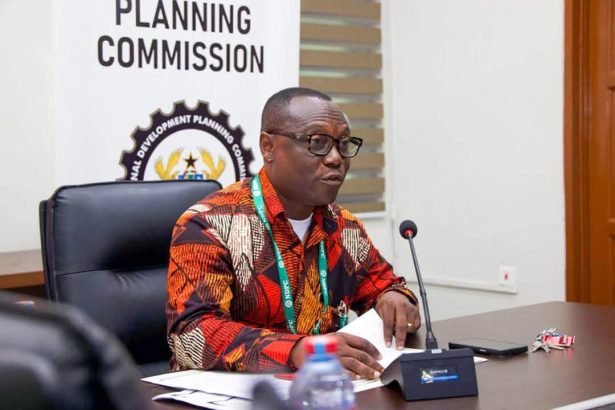
Welcoming participants to the meeting, the Director of Research at the NDPC, Richard Tweneboah-Kodua, said demographic changes alone would not automatically translate into economic growth.
He said Ghana would have to make deliberate and sustained investments across critical sectors while ensuring that policies are coordinated to maximise the benefits of the country’s changing age structure.
“Harnessing the dividend requires deliberate and sustained investments across relevant sectors, supported by coordinated policy action,” he said.
Mr Tweneboah-Kodua also urged participants to subject the report’s data, assumptions and recommendations to rigorous scrutiny to ensure that the final document provides a sound basis for policymaking.
“No contribution is wrong, no contribution is minor,” he said.
The revised report builds on an earlier study conducted in 2018 with support from the United Nations Population Fund (UNFPA).

According to the NDPC, the latest version incorporates more recent information, including data from the 2021 Population and Housing Census, to provide an updated assessment of Ghana’s demographic transition and its economic implications.
Presenting the findings, members of the consulting team, including Dr Efua Kwaambaa Turkson and Professor Eric Arthur, explained that Ghana’s declining birth and death rates are gradually increasing the proportion of people within the working-age population.
The consultants said the shift in the age structure presents an opportunity for Ghana to accelerate economic growth, but stressed that the potential gains would depend on the country’s ability to equip and productively engage its growing working-age population.
They identified investments in health, education, family planning and employment as important conditions for converting demographic change into economic benefits.
The team also pointed to the need for broader economic reforms and effective governance to create an environment in which the demographic transition can contribute meaningfully to national development.
As part of the presentation, the consultants introduced a modelling tool capable of projecting potential outcomes under different investment scenarios.
The tool is expected to help policymakers assess how varying levels of investment and policy interventions could influence Ghana’s demographic and economic trajectory through to 2057.
The modelling provides a basis for examining different pathways and understanding the possible long-term consequences of decisions taken today on the country’s population and economy.
In her closing remarks, the Director of Development Policy at the NDPC, Alice Amekudzi, reaffirmed the Commission’s commitment to the revised report and said the validation process would help strengthen efforts to translate Ghana’s demographic transition into sustainable development.
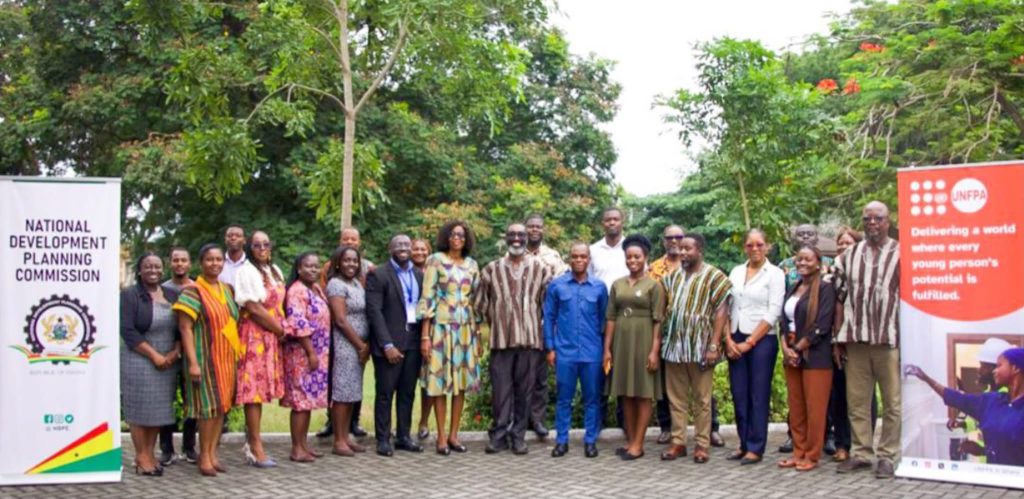
The validation meeting brought together representatives from ministries, departments and agencies, civil society organisations, academia and development partners.
The NDPC said contributions from the participants would help improve the report and strengthen its relevance as a tool for policy planning and efforts to harness Ghana’s demographic dividend.