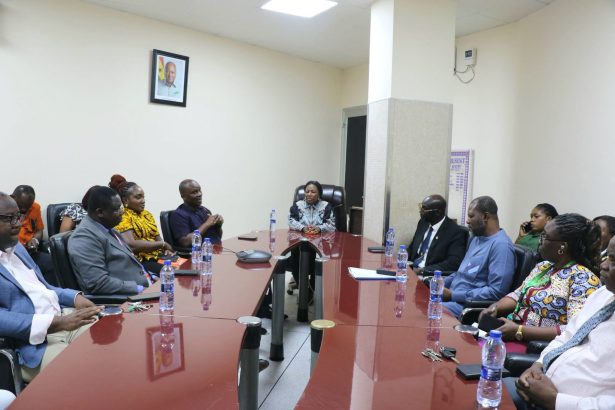
The pressure on Ghana’s maternal healthcare system has come sharply into focus in Kumasi, with the Deputy Minister for Health, Ayensu-Danquah, engaging health authorities at the Komfo Anokye Teaching Hospital (KATH) and Kumasi South Hospital over persistent challenges affecting the delivery of emergency and maternal care.
The Deputy Minister’s visit to the two major health facilities formed part of her first-day engagement in the Ashanti Region, where she sought first-hand accounts of the difficulties confronting health professionals responsible for caring for mothers and newborns.
At KATH and Kumasi South Hospital, discussions with hospital management and frontline healthcare workers centred on some of the most critical factors influencing maternal outcomes, including emergency obstetric care, referral systems, infrastructure and staffing.
The engagements also exposed the growing pressure on KATH as a major referral centre serving patients from across the Ashanti Region and beyond.
Health professionals used the opportunity to press Government to expedite the completion of the Sewua and Afari Hospitals, arguing that the two facilities could significantly ease the burden on KATH while bringing essential healthcare services closer to communities.
More Read

The call is particularly significant as KATH continues to serve as a critical referral point for complicated maternal and newborn cases, placing considerable demands on its infrastructure, personnel and emergency services.
The Deputy Minister assured hospital authorities and healthcare professionals that Government remains committed to tackling the challenges undermining maternal healthcare delivery and strengthening the capacity of facilities to provide timely and quality care.
Her visit went beyond meetings with administrators. She toured labour wards, outpatient departments and other key units at the facilities, while also interacting with patients to hear directly about their experiences and the care they were receiving.
The engagements come as Government faces continued pressure to accelerate efforts to reduce preventable maternal deaths and improve outcomes for mothers and newborns.
For health professionals in the Ashanti Region, however, the message from the field is clear: expanding and completing referral infrastructure is becoming increasingly urgent.
The proposed completion of the Sewua and Afari Hospitals is therefore being viewed not simply as an infrastructure project, but as a potential intervention to redistribute the patient burden, strengthen the region’s referral network and improve access to timely maternal care.
The Deputy Minister’s engagements have provided Government with a closer look at the realities confronting healthcare workers on the frontline. The challenge now is to translate those findings into concrete action before pressure on the region’s major hospitals becomes an even greater threat to maternal and newborn care.