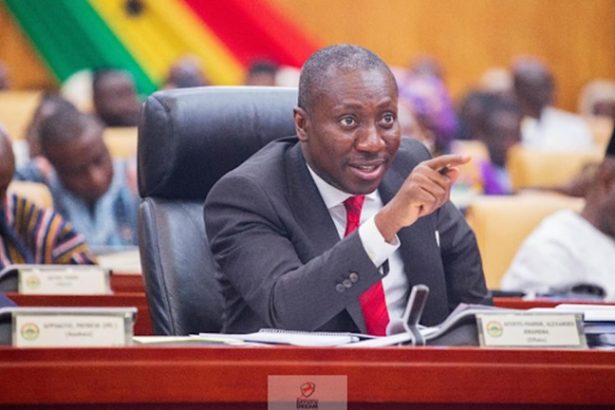
Calls are growing for the Minority Leader in Parliament, Alexander Afenyo-Markin, to face contempt proceedings after publicly attacking a circuit court judge over the detention of New Patriotic Party (NPP) communicator, Kwame Baffoe, widely known as Abronye DC.
Private legal practitioner and petitioner, Justice Abdulai, says the comments made by the Effutu legislator against the judge were not only improper but amounted to a direct affront to the authority and dignity of the courts.
Speaking during an interview aired on GHOne TV on 19 May 2026, Justice Abdulai argued that Afenyo-Markin cannot hide behind parliamentary immunity to escape accountability for his remarks.
According to him, the Minority Leader, by virtue of his legal background, fully understands the implications of publicly disparaging a sitting judge over a pending judicial matter.
“The Minority Leader is very much aware of this. The Minority Leader is a senior lawyer. He knows very well that contempt of court is part of the process and that he cannot rely on his parliamentary immunity,” he stated.
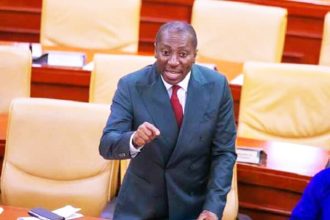
Justice Abdulai maintained that the original purpose of parliamentary immunity was to shield lawmakers from political persecution by the Executive arm of government, not to provide cover for attacks on the judiciary.
He argued that Ghana’s democratic institutions have evolved beyond the era where parliamentarians required blanket protection from state intimidation.
“Historically, parliamentary immunity was designed to protect members of parliament from abuse by the executive. Today, we no longer have that kind of situation because we have systems in place to check abuses by the executive against parliamentarians,” he explained.
The legal practitioner further insisted that the judiciary must not remain silent when its authority is challenged publicly by political figures.
“And so, if a parliamentarian relies on his immunity to abuse the court, I would insist that the appropriate authorities in this particular case, unfortunately it can only be the court, invoke its authority to cite him for contempt. And I would strongly urge that to happen,” he added.
Justice Abdulai also stressed that public office holders must exercise restraint and respect in their criticism of constitutional bodies, warning that sustained attacks on judges risk eroding public confidence in the justice system.
The controversy follows remarks made by Afenyo-Markin during a press conference on 17 May 2026 after a circuit court judge identified as “Niger” declined to grant bail to Abronye DC.
Clearly angered by the court’s decision, the Minority Leader openly questioned the judge’s competence and declared he had no respect for him.
“That judge has no respect for his own judicial oath. I don’t think he read the law. That circuit court judge called Niger, I have no respect for him,” Afenyo-Markin stated.
He also vowed to continue criticising the judge until he “upholds the law.”
The development has intensified conversations within legal and political circles over the growing tension between politicians and the judiciary, with some observers warning that inflammatory public attacks on judges could undermine confidence in the administration of justice.