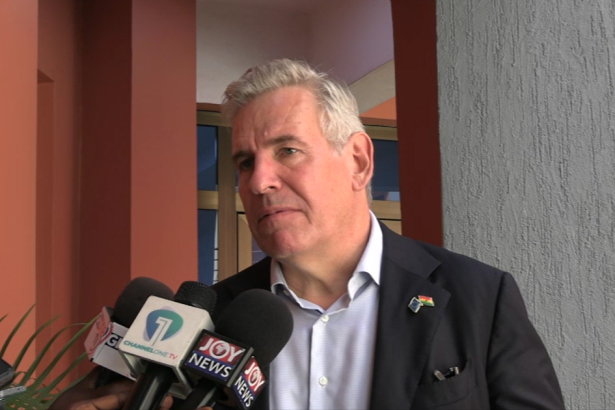
The European Union Ambassador to Ghana, Rune Skinnebach, has urged Ghana to sustain its economic and political stability, saying it remains critical to attracting increased investment from European partners.
He said while Ghana’s current macroeconomic and political environment is encouraging, continued commitment to ongoing reforms will be necessary to ensure long-term stability, particularly as the country approaches an election year.
The ambassador expressed concern about instability in the Sahel region and developments in neighbouring countries, warning that such risks could have spillover effects on Ghana’s security environment. He assured that the European Union remains committed to supporting Ghana in maintaining peace and stability.
He made the remarks during a Career Service Centre programme for students at the Kwame Nkrumah University of Science and Technology (KNUST), where he engaged young people on governance, democracy and economic development.
According to him, Ghana’s democratic system remains strong, but citizens must continue to demand accountability from leaders to strengthen governance outcomes.
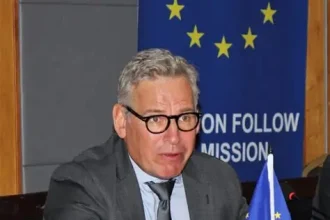
“I think that the economy, the peace and security, and the democracy are all very successful in Ghana. However, it’s a real challenge to ensure that the economic stability is sustainable,” he said.
He noted that Ghana’s economic stability is supported in part by high gold prices and ongoing reforms, but stressed the need for discipline in public spending and sustained policy implementation ahead of elections.
He further urged Ghana to take full advantage of the European Union’s Global Gateway Investment Package for Africa, which is designed to support infrastructure, development financing and private sector growth.
According to him, Ghana must strengthen its macroeconomic stability, improve its business environment and ensure predictable legal and regulatory frameworks to attract more European investors.
“Ghana has to make itself attractive to benefit from this offer,” he added, stressing the importance of infrastructure development and investor-friendly policies.
The engagement forms part of ongoing diplomatic efforts to deepen EU-Ghana cooperation in trade, investment and development partnerships.