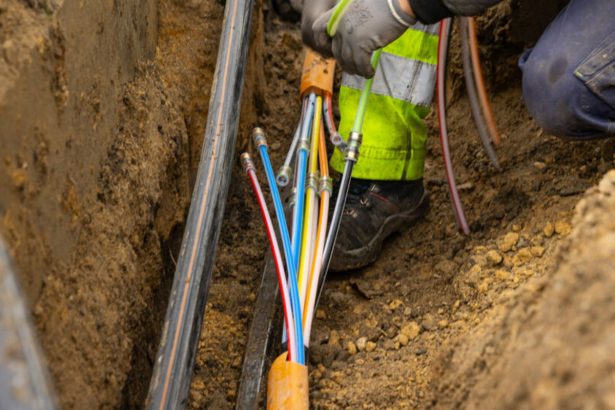
The Ghana Chamber of Telecommunications has raised concerns over a sharp rise in fibre optic cable cuts across the country, warning that the situation is threatening network stability and increasing operational costs for service providers.
Chief Executive Officer of the Chamber, Sylvia Owusu-Ankomah, said the industry is now recording more than 8,000 fibre cuts annually, compared to about 400 cuts per year in the early stages of network rollout.
She made the disclosure during the soft launch of the Chamber’s 15th anniversary celebrations, where she highlighted the growing financial burden placed on telecom operators as a result of repeated infrastructure damage.
According to her, resources that would have been channelled into expanding network coverage and improving service quality are increasingly being redirected into repair works.
She explained that the rapid expansion of telecommunications infrastructure over the years has contributed to increased exposure of fibre networks, even as internet penetration in Ghana has grown from about 4 per cent to over 70 per cent.
The Chamber warned that fibre cuts remain one of the most serious threats to service reliability in the country’s digital ecosystem.
“We are experiencing over 8,000 cuts per annum when it comes to fibre cuts, which is increasingly a strain on our operators’ resources,” she said.
She added that the trend undermines investment in new infrastructure and affects operators’ ability to meet quality-of-service obligations.
The Chamber is therefore advocating the implementation of a “dig once” policy, which would require the integration of fibre duct infrastructure into major road construction projects.
It believes the policy would protect underground fibre installations and reduce accidental damage caused during road works and other construction activities.
Discussions on the proposal are reportedly at cabinet level, with industry players urging government to fast-track its adoption.
The Chamber said resolving the fibre cut challenge is essential to sustaining network reliability and supporting Ghana’s growing digital economy.
“This has been a plague of the industry for quite a while and we believe Ghana has matured enough to put a stop to it,” Sylvia Owusu-Ankomah added.