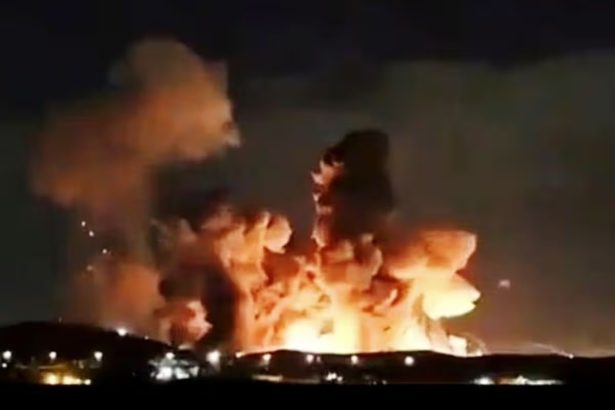
United States President Donald Trump has escalated his rhetoric on the ongoing conflict with Iran, declaring that Washington “hasn’t even started destroying what’s left” of the country’s infrastructure, even as global efforts intensify to reopen the Strait of Hormuz.
In a series of social media posts late Thursday, Trump signalled plans to expand U.S. strikes to include key infrastructure such as bridges and electricity facilities, warning that Iran’s leadership “knows what has to be done, and has to be done, fast.”
The latest comments come nearly five weeks after the conflict began with a joint U.S.-Israeli aerial offensive, plunging the region into instability and triggering volatility across global financial markets.
Tensions have continued to rise amid stalled indirect negotiations between Washington and Tehran, with little indication of a breakthrough. The hardening stance by the White House also reflects growing domestic pressure in the United States over the direction and duration of the war.
Iran has strongly condemned the targeting of civilian infrastructure. Foreign Minister Abbas Araqchi criticised the strikes, stating that attacks on non-military sites, including bridges, would not force Iran into submission.

Recent U.S. strikes reportedly hit a newly constructed bridge linking Tehran to Karaj, which had been due to open later this year. Iranian state media reported casualties following the attack.
Meanwhile, satellite imagery has shown smoke rising from facilities on Qeshm Island, a strategically important location near the Strait of Hormuz — a critical global energy transit route.
The conflict has also spilled across the Gulf region. Kuwait confirmed that drones struck parts of its Mina al-Ahmadi refinery, sparking fires but causing no reported injuries. Saudi Arabia also said its air defence systems intercepted multiple drones in recent hours.
Iranian military sources have further claimed that air defence systems shot down a second U.S. F-35 fighter jet over central Iran. There has been no immediate confirmation from the United States, although the U.S. military previously acknowledged that one F-35 made an emergency landing following a combat mission.
As the conflict intensifies, dozens of countries are exploring diplomatic and security options to restore shipping through the Strait of Hormuz, where disruptions continue to threaten global oil supplies and economic stability.