By Patrick Biddah
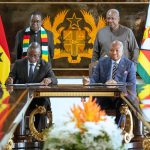
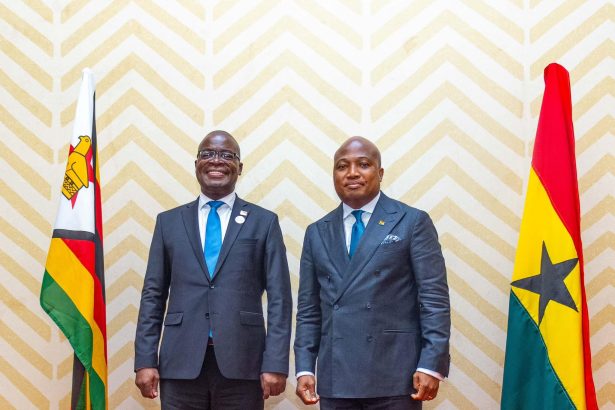
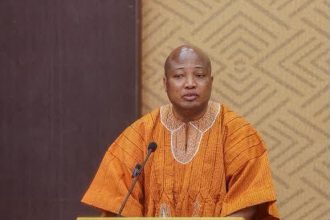
At the closing session of the Ministerial Meeting of the Permanent Joint Commission for Cooperation (PJCC) held in Accra on March 31, 2026, Ghana’s Minister for Foreign Affairs, Samuel Okudzeto Ablakwa, called for a renewed focus on industrial development and deeper economic collaboration between Ghana and Zimbabwe.
Addressing senior officials and diplomats from both countries, the Minister emphasized that the PJCC must serve not merely as a diplomatic platform but as a catalyst for tangible development outcomes that directly benefit citizens.
Mr. Ablakwa highlighted industrial development as a central pillar of the Ghana–Zimbabwe partnership, stressing that both nations must move beyond exporting raw materials and instead focus on value addition and manufacturing.
“Through collaboration, technology sharing and value addition, our natural resources must contribute meaningfully to sustainable economic growth,” he stated, pointing to the vast mineral wealth of both countries, including gold, lithium, diamonds and manganese.
More Read
He further noted that Ghana’s position as host of the African Continental Free Trade Area Secretariat and Zimbabwe’s strategic access to the Southern African Development Community present a unique opportunity to strengthen regional value chains and expand intra-African trade.
The Minister underscored the urgency of removing barriers to trade, stressing that bureaucratic and logistical constraints continue to hinder economic cooperation between African states.
“In this context, our two countries must intensify efforts to remove trade barriers and improve connectivity between ECOWAS and SADC markets,” he said, adding that such measures would enable businesses to access larger markets and unlock new opportunities for growth.
Mr Ablakwa, also called for stronger business-to-business partnerships and joint ventures, urging the private sector in both countries to take advantage of the policy frameworks being established through the PJCC.
He noted that enhanced cooperation in sectors such as mining, agriculture, education, and innovation would not only boost economic output but also create jobs and improve livelihoods across both nations.
Touching on the historical ties between the two countries, he referenced Ghana’s early support for Zimbabwe’s liberation struggle under Kwame Nkrumah, noting that the enduring relationship must now evolve into a results-driven economic partnership.
In his remarks, Zimbabwe’s Minister for Foreign Affairs and International Trade, Amon Murwira, expressed appreciation to the Government and people of Ghana for their warm hospitality, describing the meeting as a historic step in elevating bilateral relations after decades of informal cooperation.
Prof. Murwira stressed that diplomacy must be practical and people-centered, arguing that international relations should ultimately deliver basic needs such as food, water, shelter, and dignity.
“If diplomacy leads to no food, no water and no education, then it must be questioned,” he said, calling for a shift toward results-oriented engagement.
He further emphasized the importance of trade and investment, noting that true partnership is realized when countries “break bread together” through economic exchange.
He advocated for increased agricultural trade, infrastructure development, and the establishment of trade warehouses to facilitate the movement of goods between the two nations.
Prof. Murwira, also reaffirmed Zimbabwe’s commitment to regional integration and Pan-Africanism, urging both countries to leverage continental frameworks to drive prosperity,