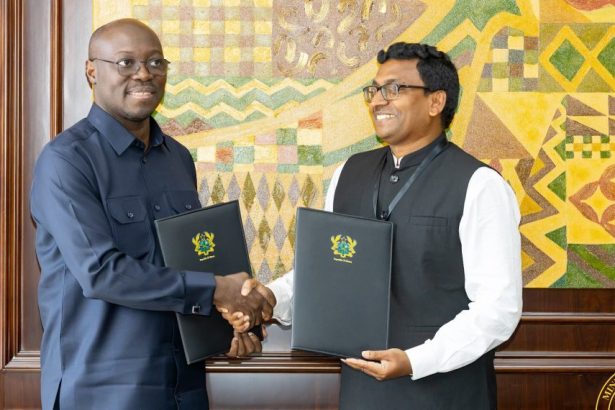
Finance Minister Cassiel Ato Forson has announced that Ghana has secured its 11th bilateral debt restructuring agreement, this time with the Export-Import Bank of India, as part of ongoing efforts to stabilise the country’s struggling economy.
The latest agreement marks another milestone in Ghana’s debt restructuring programme, aimed at restoring sustainability after a period of severe fiscal strain.
In a statement shared on Facebook, Dr Forson confirmed the development, stating: “I recently signed Ghana’s 11th bilateral debt restructuring agreement, this time with EXIM India.”
He expressed confidence that the country is gradually turning the corner, pointing to improving economic indicators.
“We are moving steadily towards a low risk of debt distress, with clear indicators that the worst is behind us,” he stated.
More Read
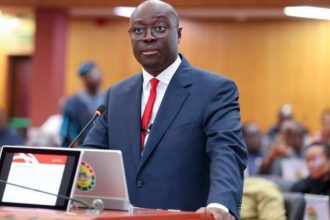
Dr Forson underscored government’s commitment to strict fiscal discipline, insisting that Ghana will meet all obligations under the restructuring programme.
“Our commitment is firm: to honour all restructured obligations on time and to keep debt sustainability at the core of every financing decision going forward,” he said.
In a strong caution against past practices, the Finance Minister stressed that the era of excessive borrowing must come to an end.
“Ghana will not return to a path of unsustainable borrowing,” he emphasised.
As part of broader fiscal reforms, Dr Forson disclosed plans to introduce a new Loans Act to regulate how borrowed funds are utilised.
“As part of this reset, the government will introduce a new Loans Act to strictly define the use of borrowed funds, ensuring that every loan is tied to high-impact, value-for-money investments,” he explained.
He added that future borrowing would be guided by measurable benefits to citizens.
“Our guiding principle is simple: whatever we borrow must be worth it and must deliver tangible benefits to the Ghanaian people,” Dr Forson said.
The agreement with EXIM India is expected to further bolster Ghana’s restructuring efforts as authorities seek to restore macroeconomic stability and rebuild investor confidence.