By Patrick Biddah
Ghana’s Minister for Foreign Affairs, Samuel Okudzeto Ablakwa, has underscored that the global call for reparatory justice is not only about addressing historical wrongs but also about honoring the resilience of Africans who endured the horrors of slavery.
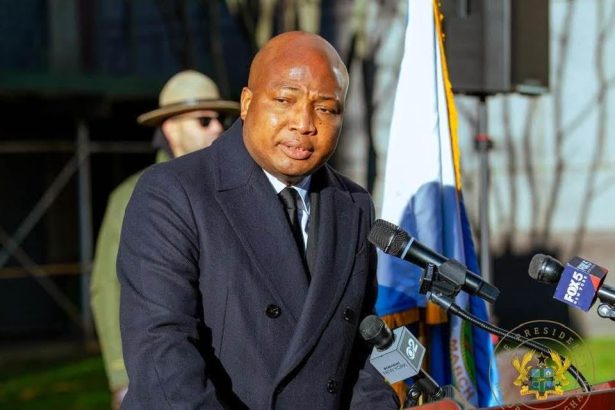
Speaking at a high-level special event at the United Nations Headquarters in New York, the Minister said the gathering serves as a moment of reflection and responsibility for the international community.
He noted that the meeting, held on the eve of the International Day of Remembrance of the Victims of Slavery, provides an opportunity “to honour the resilience of those who endured unimaginable suffering” during the transatlantic slave trade.
Mr. Ablakwa emphasized that beyond remembrance, the event seeks to “reaffirm a shared commitment to reparatory justice and healing for Africans and people of African descent.”
According to him, the legacy of slavery continues to shape modern societies, making it imperative for nations to engage in honest dialogue about justice, equality, and restoration.
The Minister stressed that Ghana approaches the issue with a deep historical consciousness, noting that the country bears physical and emotional reminders of the slave trade.
“In convening this high-level gathering, Ghana does so with a deep awareness of history and responsibility,” he stated, pointing to the forts and castles along the country’s coastline as enduring symbols of the tragedy.
He explained that these sites stand as evidence of a system that forcibly removed millions of Africans and altered the trajectory of entire societies.
Mr. Ablakwa further highlighted that the call for reparatory justice is rooted in acknowledging these historical injustices and their continuing impact on people of African descent worldwide.
He added that Ghana’s leadership in advancing this agenda reflects a broader effort within the African Union to pursue justice and accountability on the global stage.
The Foreign Minister also reiterated that confronting the past is essential to building a future grounded in dignity and equality.
He called on the international community to strengthen its resolve, noting that remembrance must translate into meaningful action toward justice.
The high-level event brought together global leaders, policymakers, and advocates to deepen discussions on reparatory justice and the enduring legacy of slavery.