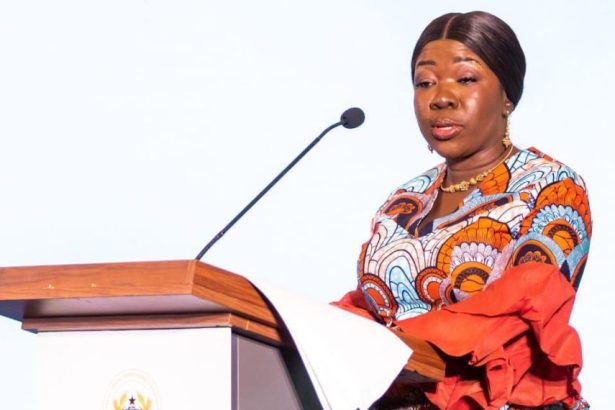
The Minister for Trade, Agribusiness and Industry, Elizabeth Ofosu-Adjare, has revealed that government has recovered GHC107 million from defaulted Ghana EXIM Bank loans, as several other loan disbursements have been flagged and referred to security agencies over concerns about how they were approved.
The disclosure was made on Wednesday, January 21, during the Government Accountability Series, where the Minister outlined efforts to tighten supervision over state-backed financing and restore discipline in public credit administration.
According to her, Ghana EXIM Bank disbursed a total of GHC304 million in 2025 under what she described as a strict credit creation framework aimed at ensuring that only viable businesses with clear economic value receive support.
She stressed that the era of politically influenced or loosely approved loans must end, noting that beneficiaries must demonstrate both economic impact and repayment capacity before funds are released.
“This is not money for the boys or money for the girls. Applicants must meet the requirements and show that the credit will benefit the economy and that they can repay. This is not free money,” she stated.

The Minister explained that beyond new disbursements, the Bank has intensified efforts to retrieve outstanding debts, leading to the successful recovery of GHC107 million from loans that had remained unpaid for years.
More significantly, she disclosed that some loan transactions could not be properly accounted for.
“There are loans that we do not know how they were disbursed. These have been referred to the appropriate security agencies to be dealt with expeditiously,” she said.
She added that in addition to security referrals, legal action has already begun in several cases involving problematic legacy loans, as government seeks to clean up the system and protect public funds.
The development raises fresh questions about past lending practices at the Ghana EXIM Bank and signals a tougher posture by government toward financial accountability and credit discipline within state institutions.