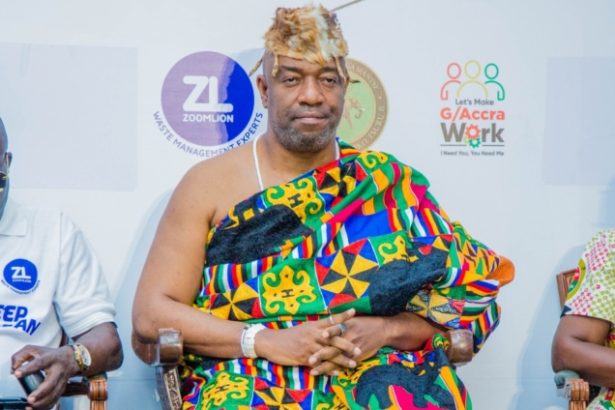
Children found working in the fishing industry during school hours in the Ga State could soon trigger the arrest of their parents or guardians, under new traditional by-laws being prepared by the Ga Mantse, King Tackie Teiko Tsuru II.
The proposed measures, which are expected to be enforced in collaboration with the police and local authorities, are aimed at ending the long-standing practice of engaging school-age children in commercial fishing at the expense of their education.
The Ga Mantse revealed the plans during the 2026 Kinka Blonya festival, an annual New Year celebration dedicated to children, held on Thursday, 1 January.
Addressing a gathering of traditional leaders, parents and children, the king said traditional authorities across the Ga State had reached a consensus that education must take priority over economic activity involving minors.
“All the traditional authorities in the Ga State have come together to actively promote education. A time is nearing when fishing by children at the expense of education will be criminalised,” he said.

Under the proposed by-laws, parents who permit or compel their children to engage in fishing during school hours would face arrest and prosecution once the regulations are ratified.
The Ga Mantse said the era where children are seen at landing beaches instead of classrooms would no longer be tolerated, describing education as “non-negotiable” for the future of the state.
To address concerns that poverty may force families to rely on child labour, the king announced that his office had expanded scholarship support for vulnerable households within coastal communities.
“We are at a point where prioritising education in the Ga state is non-negotiable. We are providing over 1000 scholarships; therefore, parents have no excuse to enrol their kids in schools. Let’s all come together and raise the Ga Children for the future,” he added.
The scholarship programme, which targets more than 1,000 children, is intended to remove financial barriers to schooling and ensure that enforcement of the by-laws does not disproportionately affect low-income families.
According to the traditional leadership, the initiative forms part of a broader effort to reshape the socio-economic future of the Ga State by producing a generation of trained professionals, including doctors, engineers and entrepreneurs.
The Ga Mantse urged parents to consider the long-term benefits of education over the immediate gains from daily fishing activities, stressing that sustainable development depended on a shift in mindset.
Enforcement plans are expected to include regular patrols at fishing landing sites to identify children who should be in school, legal action against defaulting parents, and monitoring of scholarship beneficiaries to ensure regular attendance and academic progress.
Traditional authorities say further details on implementation will be announced once the by-laws are formally approved.