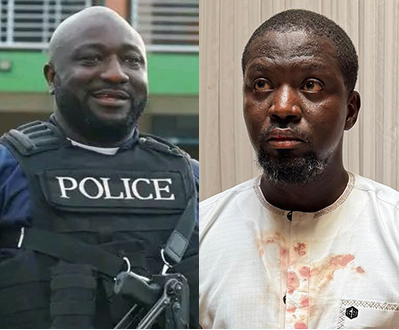
The leader of the IGP Special Operations Team, popularly known as “Black Maria,” DSP Bawah Abdul Jalil, has hinted at an upcoming change in the unit’s leadership.
DSP Bawah Abdul Jalil, closeness with politicians and senior police officers, including the current Police Inspector General of Police (IGP), Christian Tetteh Yohunu, has often been cited as placing him above the law.
Not even relentless calls from the chiefs and residents of Tamale and its surrounding areas, where he grew up, have prompted the police administration to remove him, despite their concerns about his operations.
He gained prominence following the infamous attack on a senior police officer, DSP Nanka Bruce, at Jubilee House in 2017, by a pro-New Patriotic Party (NPP) group, ‘Invincible Forces’, days after President Nana Akufo-Addo took office.
However, Accra-based Channel One News reported yesterday that it had seen a video in which DSP Bawah Abdul Jalil, the officer, addressed members of the unit while referencing the alleged assault on renowned Ghanaian artist Ibrahim Mahama in Tamale.
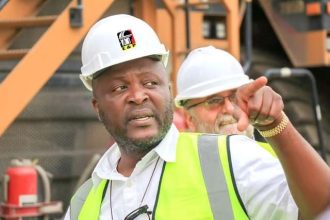
The incident, which occurred on March 21, is reported to have involved personnel believed to be part of the Black Maria team. However, DSP Bawah Abdul Jalil’s team has denied any involvement, insisting that its officers were not present at the scene.
The case was subsequently referred to the Police Professional Standards Bureau, the internal body responsible for investigating misconduct within the Ghana Police Service.
DSP Bawah Abdul Jalil indicated that while the unit remains operational, a leadership transition is imminent.
“Today, we are going to move on with the IGP’s special operations because it is still in existence, but there’s going to be a change in the leadership. The leadership that is coming is still going to be the leadership that is going to work for the IGP.
“I believe the total support that I had from you, whoever that is going to come to take over from me, everyone will join hands and make sure we keep this country safe, irrespective of whatever reservations we have,” he said.
The Ghanaian visual artist has, however, urged the public to trust the police to conduct a careful and thorough investigation into his assault, even as the process moves more slowly than expected.
Speaking to Eyewitness News, yesterday, Tuesday, April 7, Mahama reflected on the March 21 incident, which allegedly involved personnel from the Inspector-General of Police’s Special Operations Team, known as the “Black Maria.”
Acknowledging the slow pace of the inquiry, Mahama stressed that thoroughness is essential to achieving justice. He also credited his family’s support for helping him navigate the aftermath of the attack, noting that a related medical procedure is still pending.
“The process has been quite slow, but I also understand that it is part of their work. I just want to respect that and make sure we give them the benefit of the doubt, so they can conduct the investigation surrounding the situation,” he said.
Mahama reiterated his commitment to legal action if the investigation’s outcome, yet to be released, fails to hold the perpetrators accountable.
“We want to ensure that the men who actually assaulted us are not allowed to go unpunished. The matter must be pushed to a logical conclusion,” he added, underscoring the importance of patience and due process in the pursuit of justice.
He had alleged that the commander of the police Special Operations Team, DSP Bawah Abdul Jalil, was present during his alleged assault and could have stopped it but failed to intervene.
Mahama said the officer did not physically participate in the assault but remained on the scene from the beginning near the Mariam Hotel in Tamale until they arrived at the police station.
“He was not physically involved in the assault, but all the men were acting under his command because he was on the site from the very beginning until we went to the police station,” Mahama said.
He recounted the events in detail: “…He was on the site, he was there at the scene, the Mariam Hotel when the whole thing happened and when we went to the police station we were in a police pickup behind his car which we were driven to the police station and they asked us to take off our clothes because my clothes were covered in blood.
“There, the officers continued to assault me because they wanted me to delete the video that they thought I was taking of them when they started hitting the car and I started filming and that was what they were actually annoyed by that I was filming them.”
Mahama maintained that the team’s commander was fully aware of the assault and did nothing to stop it.
“For me, it wasn’t a matter of whether he hit us or not. Everything happened under his command. If he wanted it to stop or if he didn’t want it to transpire at all, that would have been the case but that was not what happened. He did know [it was me] very well,” he stated.
He further claimed that DSP Bawah Abdul Jalil knew him personally and was familiar with his family, yet failed to intervene during the alleged assault.
His account contradicts an earlier statement from the police team, which denied any assault took place. The officers said the incident arose from a traffic enforcement operation that escalated after a driver allegedly blocked the road and failed to comply with instructions.
According to the police, officers acted to prevent a possible mob attack and arrested those involved for offensive conduct, later releasing them into the custody of their father.
Meanwhile, seventeen (17) days after renowned Ghanaian visual artist Ibrahim Mahama was allegedly assaulted by police officers, authorities have yet to provide a substantive public update on the status of investigations, raising growing concerns about transparency and accountability.
The incident, reported to have occurred on March 21, is alleged to have involved personnel believed to be part of the Inspector-General of Police’s Special Operations Team, commonly referred to as the “Black Maria.”
Despite the seriousness of the claims, the team led by Abdul Bawa Jalil has denied any involvement, maintaining that its officers were not present at the scene.
In the days following the alleged assault, the matter was referred to the Police Professional Standards Bureau, the internal unit tasked with investigating misconduct within the Ghana Police Service.
However, nearly three weeks on, the Bureau has yet to communicate any findings or progress to the public.
Mahama, who met with the Police Management Board (POMAB) in Accra on March 26, made it clear that his pursuit of the case is not motivated by financial compensation but by a desire for justice and institutional accountability.
“We are not looking for money. It’s more about justice,” he told journalists after the meeting, stressing the importance of ensuring that the full circumstances of the incident are uncovered and addressed.