Every child deserves the chance to grow up in the safety of a loving home, attend school, play with friends and dream about the future.
Sadly, for countless children across the world, those dreams are cut short by human traffickers who prey on poverty, desperation and vulnerability.
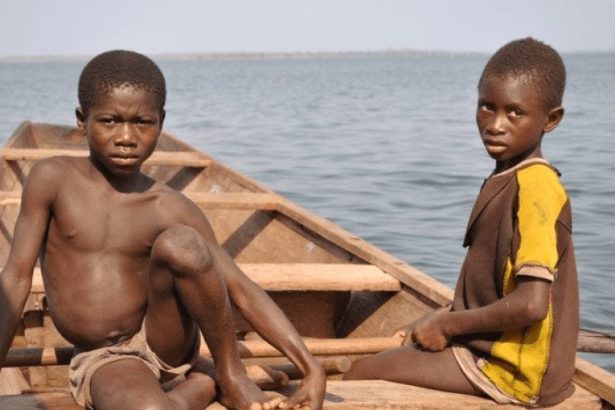
Instead of classrooms, many find themselves in fishing boats, farms, factories, homes or online scam centres, forced to work under dangerous conditions for the profit of others.
Their childhood is stolen, their rights violated and their future placed in jeopardy.
It is against this troubling backdrop that the world will once again observe the World Day Against Trafficking in Persons on July 30.
Established by the United Nations General Assembly in 2013, the annual observance seeks to raise global awareness about one of the world’s fastest-growing organised crimes while promoting and protecting the rights of victims.
More importantly, it reminds governments, institutions, communities and individuals that human trafficking is not a distant problem affecting only other countries.
It is a global crisis that exists in our towns, villages and cities, demanding collective action and unwavering commitment.
Human trafficking is often misunderstood. Many people associate it only with the illegal movement of people across international borders.
In reality, trafficking involves the recruitment, transportation, transfer, harbouring or receipt of persons through force, fraud, deception or coercion for the purpose of exploitation.
Victims may be forced into labour, sexual exploitation, domestic servitude, criminal activities or other forms of abuse.
When children are involved, international law considers it trafficking whenever they are recruited or moved for exploitation, regardless of whether force or coercion is used.
This distinction reflects the heightened vulnerability of children and society’s responsibility to protect them.
Across the world, millions of children continue to endure exploitation. The International Labour Organisation estimates that millions of children remain trapped in child labour, with many performing hazardous work that threatens their health, education and development.
Behind these figures are young lives interrupted by exploitation, fear and lost opportunities.
In Ghana, one of the most disturbing manifestations of child trafficking has persisted for decades along the shores of Lake Volta.
Children, often from poor rural communities, are trafficked under false promises of education or better opportunities but instead find themselves working in the fishing industry.
Their days begin before sunrise and often end long after sunset as they untangle fishing nets, dive into dangerous waters to retrieve equipment caught beneath submerged tree stumps, paddle canoes and carry heavy loads.
Many receive little or no remuneration, live in poor conditions and are denied access to education and healthcare.
What should have been years of learning and discovery become years of hardship and exploitation.
One survivor, reflecting on those painful years, recalled, “I thought I was going to school and helping my family. Instead, I worked every day from morning until night. I only wanted to go home.”
Those few words capture the emotional and psychological scars that trafficking leaves behind.
Every rescued child carries a story of interrupted dreams, broken trust and extraordinary resilience.
Although the challenge remains enormous, Ghana has made encouraging progress in confronting trafficking.
According to the Human Trafficking Secretariat of the Ministry of Gender, Children and Social Protection, the country rescued 2,331 victims in 2025, the highest number recorded over the past five years.
This remarkable increase from 794 victims in 2024, 1,089 in 2023, 846 in 2022, and 821 in 2021 should not be interpreted simply as evidence of rising trafficking.
Rather, it reflects stronger institutional collaboration, improved victim identification, greater public awareness and more effective rescue operations.
The data also reveals the diverse nature of trafficking in Ghana. Of the victims rescued in 2025, 1,544 were men, 789 were women, 425 were children and 1,906 were adults.
These figures challenge the common misconception that trafficking affects only women and girls. Men and boys also fall victim to forced labour, cyber-enabled exploitation and other forms of abuse. Trafficking spares no gender, no age group and no community.
Encouragingly, the country’s efforts are yielding results beyond victim rescue. Law enforcement agencies have increasingly pursued traffickers through the courts, demonstrating that perpetrators will no longer operate with impunity.
During 2025, 106 offenders were prosecuted and convicted for cybercrime trafficking and exploitation-related offences, including fraud by false pretence, while 54 offenders were convicted for human trafficking and child labour offences following investigations into 2,022 cases.
These convictions represent justice for survivors and send a clear warning that exploiting vulnerable people carries serious consequences.
Recent operations by the Criminal Investigations Department (CID) further illustrate Ghana’s determination to dismantle trafficking networks.
Addressing a press conference in Accra on July 21, 2026, the Director-General of the CID, Commissioner of Police Lydia Yaako Donkor, announced that intelligence-led operations had rescued 33 victims of human trafficking and led to the arrest of 28 suspects involved in cyber-enabled fraud, human trafficking and illicit arms trafficking.
The operations demonstrate how trafficking has evolved beyond traditional forms of exploitation into sophisticated criminal enterprises that increasingly rely on digital technology.
This emerging reality is reflected in the theme for the 2026 World Day Against Trafficking in Persons, “Trapped Behind the Scam.”
The campaign highlights the growing number of victims deceived through fraudulent job advertisements and false promises of employment before being trapped in online scam compounds where they are forced to commit cyber fraud under threats, intimidation and violence.
It serves as a stark reminder that trafficking is adapting to the digital age and that prevention efforts must evolve accordingly.
Digital literacy, responsible use of social media and greater public awareness have become as important as border security and traditional policing.
Trafficking thrives where poverty, unemployment, inequality and limited opportunities exist.
Families struggling to survive may believe promises of employment or education offered by traffickers.
Young people searching for work become easy targets for fake recruitment agencies and online scammers.
Weak social protection systems, family breakdown, migration pressures and the demand for cheap labour all contribute to an environment where exploitation flourishes.
Addressing trafficking therefore requires more than arrests and prosecutions. It demands sustained investment in education, job creation, social protection and community development.
Awareness remains one of the most effective tools in preventing trafficking. Every informed parent who questions an offer to take a child away for work, every teacher who educates students about deceptive recruitment tactics, every journalist who investigates trafficking networks and every community leader who speaks openly about exploitation contributes to saving lives.
Schools, religious institutions, traditional authorities, civil society organisations and the media all have vital roles to play in educating the public about the warning signs of trafficking and the dangers of fraudulent employment offers, particularly those circulated through social media.
Supporting survivors is equally important. Rescue is only the beginning of recovery.
Many victims emerge from trafficking with deep physical and psychological trauma, interrupted education and few economic opportunities.
Their successful reintegration depends on access to safe shelter, counselling, healthcare, legal assistance, vocational training and family reunification.
In Ghana, institutions such as the Anti-Human Trafficking Unit of the Ghana Police Service, the Criminal Investigations Department, the Department of Social Welfare and the Human Trafficking Secretariat, working alongside civil society organisations and shelters, continue to provide critical assistance to survivors as they rebuild their lives.
Every Ghanaian has a role to play in ending this crime. Communities should promptly report suspicious recruitment activities to the Ghana Police Service or the Department of Social Welfare.
Parents must carefully verify offers involving employment or education for their children, especially when those opportunities require them to travel far from home.
Citizens can also support awareness campaigns, participate in community events marking the World Day Against Trafficking in Persons, contribute to organisations assisting survivors and engage Members of Parliament and local authorities to advocate stronger policies and adequate resources for anti-trafficking efforts.
Sharing verified information through traditional and social media can also help expose traffickers’ methods and protect potential victims.
Human trafficking is not merely a law enforcement issue; it is a profound assault on human dignity.
It deprives children of their education, separates families, fuels organized crime and undermines national development.
Every child trafficked into forced labour represents a future teacher, nurse, engineer, entrepreneur or leader denied the opportunity to realize his or her potential.
Conversely, every child rescued, every trafficker convicted and every community empowered through awareness represents hope that this injustice can be overcome.
As the world commemorates the 2026 World Day Against Trafficking in Persons, the responsibility to confront this crime belongs to all of us.
Governments must continue strengthening laws and enforcement. Security agencies must relentlessly pursue traffickers. Non-governmental organisations must expand support for survivors.
The media must continue exposing hidden exploitation and amplifying the voices of victims.
Sports institutions and businesses must adopt ethical recruitment practices that leave no room for exploitation.
Parents must ask questions, communities must remain vigilant and young people must be equipped to recognise deception in all its forms.
No child should exchange a classroom for a fishing canoe. No young person should become trapped behind an online scam.
No human being should ever be bought, sold or exploited for another person’s gain. Ending human trafficking will require sustained commitment, compassion and courage, but it is a fight that cannot be postponed.
The freedom, dignity and future of countless children depend on what we choose to do today.
Stolen childhoods: Why Ghana must intensify the fight against child trafficking