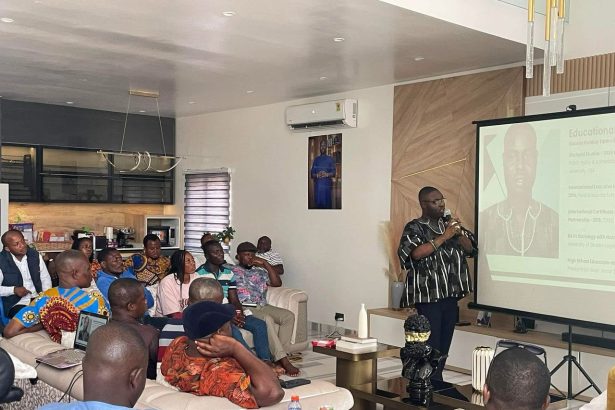
….Council of State Member
A member of the Council of State, Gabriel Tanko Kwamigah-Atokple, has welcomed the Government’s decision to accept in principle a recommendation to reduce the minimum age requirement for the presidency from 40 to 35 years, describing the move as a significant milestone in Ghana’s democratic development.
The proposal forms part of the recommendations submitted by the Constitutional Review Committee, chaired by Prof. H. Kwasi Prempeh, which have been accepted in principle by the Government led by President John Dramani Mahama in its final White Paper on constitutional reforms.
If implemented through the required constitutional amendment process, the proposal would amend Article 62(b) of the 1992 Constitution, lowering the minimum age for presidential candidates from 40 to 35 years.
Mr Kwamigah-Atokple said the Government’s acceptance of the recommendation reflected confidence in the ability of young Ghanaians to contribute meaningfully to national leadership and governance.
More Read
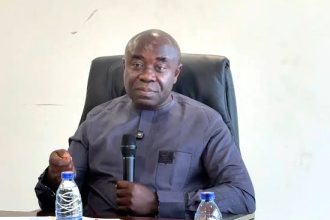
According to him, the decision also challenges the long-held notion that age alone determines a person’s competence, judgement and experience to occupy the nation’s highest public offices.
Drawing on his own experience, the Council of State member recalled that when he sought election to represent the Volta Region on the Council of State a little over a year ago, some questioned his suitability based on his age.
He said the perception that the Council of State is reserved for older people had become deeply entrenched, with advanced age often being viewed as an unwritten qualification for membership.
Mr Kwamigah-Atokple noted that he anticipated such arguments during his campaign but remained determined to demonstrate that competence, experience, sound judgement and commitment to public service should not be judged solely by age.
He said his candidature helped challenge that perception and demonstrated that younger people could also make meaningful contributions to institutions of national importance.
The Council of State member added that he was encouraged to see more young Ghanaians contesting Council of State elections across the country following his own campaign.
He described the development as evidence of democratic progress, arguing that meaningful change often begins when individuals challenge long-standing assumptions and encourage society to rethink accepted norms.
Mr Kwamigah-Atokple said the constitutional review process presents Ghana with an opportunity to redefine political leadership by creating greater space for younger citizens to participate in governance.
He stressed that lowering the presidential age qualification should not be interpreted to mean that every 35-year-old is automatically qualified to lead the country, but rather that capable and qualified citizens should not be excluded solely because of their age.
He argued that competence, rather than age, should remain the overriding consideration in assessing candidates for high public office.
With Ghana’s youthful population, he said the country’s constitutional democracy must provide adequate opportunities for the next generation to contribute their ideas, aspirations and leadership abilities to national development.
Mr Kwamigah-Atokple described the Government’s position as an important step towards broadening political participation and strengthening Ghana’s democratic institutions.
He expressed hope that future generations would regard the proposed constitutional amendment as a defining moment in the country’s democratic evolution and in expanding opportunities for younger leaders to serve at the highest levels of government.
Below is his statement
𝐆𝐡𝐚𝐧𝐚’𝐬 𝐃𝐞𝐦𝐨𝐜𝐫𝐚𝐜𝐲 𝐂𝐨𝐧𝐭𝐢𝐧𝐮𝐞𝐬 𝐭𝐨 𝐑𝐞𝐟𝐥𝐞𝐜𝐭 𝐂𝐨𝐧𝐭𝐞𝐦𝐩𝐨𝐫𝐚𝐫𝐲 𝐕𝐚𝐥𝐮𝐞𝐬 𝐚𝐧𝐝 𝐃𝐞𝐦𝐨𝐜𝐫𝐚𝐭𝐢𝐜 𝐂𝐢𝐯𝐢𝐥𝐢𝐬𝐚𝐭𝐢𝐨𝐧.
It is, therefore, welcoming news that the Government, led by His Excellency President John Dramani Mahama, has accepted in principle the recommendations of the Constitutional Review Committee, chaired by Professor H. Kwasi Prempeh, as contained in the Government’s final Paper.
Among the recommendations is the proposed reduction of the minimum age qualification for the presidency from 40 to 35 years, with a corresponding amendment to Article 62(b) of the 1992 Constitution of the Republic of Ghana.
The Government’s acceptance of this recommendation demonstrates confidence in the capacity of young Ghanaians to contribute meaningfully to the highest levels of national leadership and governance. It also challenges the long-held perception that a person’s age should determine whether he or she possesses the capacity, judgement and experience required to occupy high public office.
This resonates deeply with my own experience.
A little over a year ago, in my quest to represent the good people of the Volta Region on the Council of State, I encountered a familiar argument. There were attempts to suggest that my age somehow made me unsuitable to serve at the highest advisory institution established under Article 89 of the 1992 Constitution of Ghana.
The argument was largely rooted in the perception that the Council of State is an institution reserved for people of a certain age, where grey hair is almost regarded as a qualification for membership.
I knew from the onset that this long-standing perception could be used as a propaganda tool against my candidature. I was, therefore, prepared to challenge it, not because I sought to challenge tradition for its own sake, but because I firmly believed that competence, experience, sound judgement and the willingness to serve should not be disqualified by age alone.
My candidature, in its own small way, challenged that established perception and helped demonstrate that young people can also bring valuable perspectives, experience and sound judgement to institutions of national importance.
I am particularly pleased that more young Ghanaians have since been encouraged to contest Council of State elections across the country.
This is how democratic change begins. Someone questions an old assumption, another person finds the courage to challenge it, and eventually society begins to reconsider what it once accepted as unquestionable.
The constitutional reform now under consideration presents an opportunity for Ghana to rethink how we define political leadership and participation.
Do we want a democracy where young people are only encouraged to vote, campaign and support political activism, or one where they are entrusted with genuine responsibility in shaping the direction of the Republic?
I believe the answer must be the latter.
Reducing the presidential age threshold does not mean that every 35-year-old is automatically qualified to lead a country. Age, whether young or old, should never be the sole measure of competence. Rather, the reform ensures that age alone does not unnecessarily close the door to capable citizens who are qualified and willing to serve.
Ghana has a youthful population, and our constitutional democracy must create sufficient space for the aspirations, ideas and leadership capabilities of the next generation.
The Government’s position on this recommendation is, in my view, a significant step in that direction.
Perhaps, years from now, we will look back and recognise that this proposed constitutional reform marked an important turning point in the way Ghana understands political leadership and participation.
That is the Ghana I believe we must continue to build.
Gabriel Tanko Kwamigah-Atokple
Council of State Member.