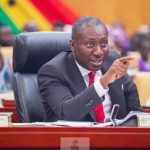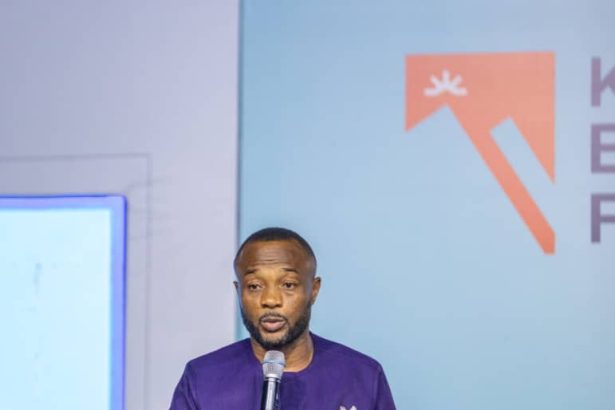
The Minority in Parliament has called for a fundamental shift in Ghana’s approach to supporting indigenous businesses, warning that political interference continues to weaken entrepreneurship and stall long-term economic growth.
Speaking at the 2026 Kwahu Business Forum on behalf of the Minority Leader, Osahene Alexander Kwamena Afenyo-Markin, Second Deputy Minority Whip Jerry Ahmed Shaib said Ghana must break away from “rhetoric and partisanship” if local enterprises are to thrive in a competitive global environment.
Addressing business leaders, policymakers and entrepreneurs under the theme “Leaders Committing to Sustenance of Ghanaian Businesses,” Shaib stressed that no business should succeed or fail based on the political administration in power.
“The success of a business should never depend on which political regime is in power,” he emphasised.
He warned that the growing politicisation of business opportunities is stifling innovation and sidelining local firms, while foreign competitors continue to dominate key sectors.
More Read

Describing entrepreneurship as central to nation-building, Shaib argued that sustainable development cannot be achieved when access to opportunities is influenced by political considerations.
He also highlighted the importance of empowering young entrepreneurs, describing them as the most “energetic and creative” force within Ghana’s business ecosystem.
Drawing from engagements with groups including GUTA, AGI, the Ghana Employers’ Association, farmers and SMEs, Shaib said the feedback received was “sobering.”
He cited major concerns such as high lending rates and strict collateral requirements, short credit tenures, rising energy costs forcing manufacturers to scale down operations, and a tax regime that places heavy burdens on industry without improving competitiveness.
Shaib further criticised the government’s AI-based port duty assessment system, the Publican Trade Solution, arguing that it has resulted in inflated and inconsistent duty valuations due to the absence of independent validation and an effective appeals process.
Across sectors, he noted, businesses continue to grapple with what he described as a persistent “consultation deficit,” where policies are introduced without adequate engagement with industry players.
To address these challenges, Shaib outlined a series of policy proposals the Minority intends to pursue in Parliament. These include establishing a statutory pre-legislative consultation framework for businesses, introducing comprehensive tax-impact assessments before new levies, and subjecting the AI-driven port system to parliamentary scrutiny alongside the creation of a credible appeals mechanism.
Other proposed measures include reviewing utility tariffs, implementing a predictable tariff roadmap, ring-fencing investment in technical and vocational education aligned with industry needs, instituting quarterly parliamentary engagements with business associations, and reforming SME financing to allow for longer loan tenures and more flexible collateral requirements.
“Our commitment is not to speak, but to be held accountable,” Shaib said.
He urged entrepreneurs to “invest boldly” in their ideas and called on the financial sector to collaborate with Parliament in building a resilient ecosystem that supports Ghanaian businesses.
“Let this forum be more than a conversation,” he added. “Let it be the beginning of sustained, structured support for Ghanaian businesses.”