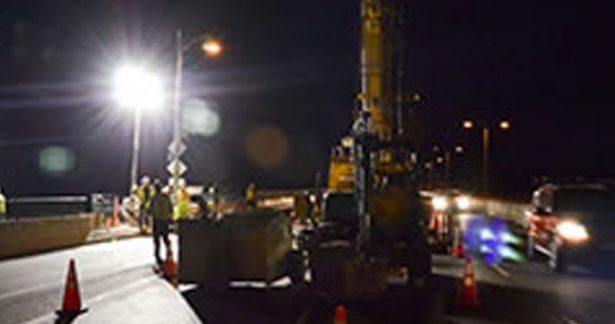
The recent announcement by the Ghana Highway Authority (GHA) to close sections of the Tetteh Quarshie road due to ongoing construction works at the Tetteh Quarshie Interchange Bridge, sparked understandable concern among commuters.
According to a press statement issued by the Authority, the closure was necessary to facilitate T-beam launching works as part of the expansion of the interchange on the N1 highway, a major infrastructure upgrade intended to reduce congestion and improve traffic flow.
The temporary traffic arrangement, which took effect on Monday, March 9, 2026, was expected to last for about four months. However, barely a day after the implementation, the Authority was compelled to rescind the decision due to severe and unexpected traffic congestion. Commuters were left stranded for hours in massive gridlock, resulting in widespread frustration.
In its statement, the Authority noted that a simulation exercise had been conducted prior to the closure.
Following the public outcry, the GHA revised its plan, indicating that construction activities requiring road closure would now be limited mainly to weekends and public holidays over the four-month period.

Unfortunately, the reality on the ground suggests that the simulation failed to accurately predict the true impact on traffic. The scale of congestion experienced during the brief closure clearly demonstrated that the diversion plan was unsustainable.
As a newspaper, we find this situation troubling. More concerning is the fact that this is not the first time such a scenario has unfolded. If anything, it suggests that lessons from past experiences have not been sufficiently applied.
Major road construction projects in a capital city like Accra must be carefully managed to minimise disruption. The Tetteh Quarshie Interchange is a critical transport hub that connects several major parts of the city. Closing such an important corridor during peak daytime traffic inevitably creates severe challenges for commuters and businesses alike.
In our view, it is time for Ghana to seriously consider normalising night-time road construction, particularly in busy urban centres. This is not a novel concept. In many advanced countries, major road works are routinely carried out at night to minimise disruptions to traffic and economic activity during the day.
Commuters in Accra already endure long and exhausting hours in traffic each day, often after struggling to secure transportation. Their frustration should not be further compounded by avoidable road closures or diversions during peak periods.
Furthermore, the construction schedule was expected to run for four months. As part of its simulation, did the Authority adequately consider the toll such prolonged congestion could have on the health and well-being of commuters?
This issue also has economic implications. Petroleum prices have been rising steadily at the pumps in the wake of tensions involving the United States, Israel, and Iran. The least authorities can do under such circumstances is to avoid creating unnecessary traffic congestion that forces motorists to burn more fuel.
More than six decades after independence, Ghana must begin to think more creatively about how public infrastructure projects are executed. A little innovation in the planning and implementation of road construction, particularly in our major cities, can go a long way toward demonstrating the efficiency and dynamism expected of a middle-income country.
Normalising night-time construction may not solve every challenge, but it would certainly represent a practical step toward reducing commuter stress, protecting productivity, and improving the overall management of critical infrastructure projects.