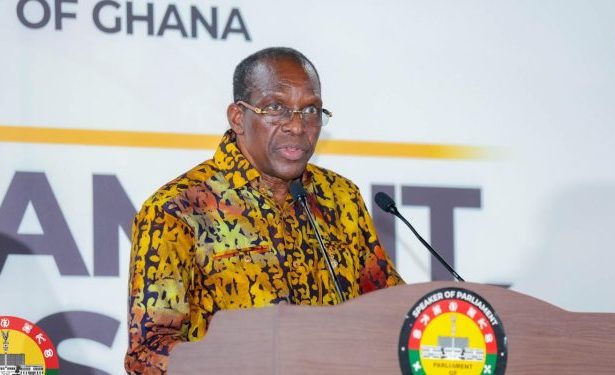
Speaker of Parliament, Alban Sumana Kingsford Bagbin, has sent a firm message to Ghana’s media fraternity: as long as he presides over the legislature, Parliament will not become a tool for silencing journalists.
At a time when concerns are mounting over the use of electronic communications laws to intimidate media practitioners, the Speaker’s assurance landed as both reassurance and warning—reassurance to journalists, and a warning to those who may seek to weaponise legislation against press freedom.
Bagbin’s position was conveyed in a speech delivered on his behalf by the Member of Parliament for La Dade-Kotopon and Deputy Minister for Local Government, Chieftaincy and Religious Affairs, Rita Naa Odoley Sowah, at the 3rd Annual Dinner Night of the Ghana Journalists Association (GJA) held in Accra on Monday, December 23.
The Speaker acknowledged the growing unease within media circles, particularly over laws originally designed to regulate digital communications but which, in practice, have increasingly been used to harass, arrest and prosecute journalists for their work.
He indicated that any existing legislation found to pose a threat to press freedom would be subjected to review, stressing that regulation must never be confused with repression.
More Read
His remarks come against the backdrop of troubling accounts shared by journalists at the event—stories of arrests, prolonged interrogations and legal battles triggered by online publications and social media commentary linked directly to their professional responsibilities.
The GJA, for its part, maintained its long-held position that while ethical and responsible journalism is essential, it must not come at the cost of constitutional freedoms. The association cautioned against laws that erode the independence of the media under the guise of regulation.
Bagbin echoed that sentiment, emphasising that Ghana’s democratic credentials rest heavily on a free and independent press. While national security remains important, he argued, it must be pursued without suffocating freedom of expression.
The dinner, which brought together journalists, lawmakers and other key stakeholders, ended with renewed calls for sustained dialogue between Parliament, the media and regulatory institutions—aimed at ensuring electronic communications laws are applied in a manner that protects journalists rather than persecutes them.