The government is constructing 16 new Senior High Schools (SHSs) as part of efforts to ease pressure on existing schools and gradually bring an end to the double-track system.
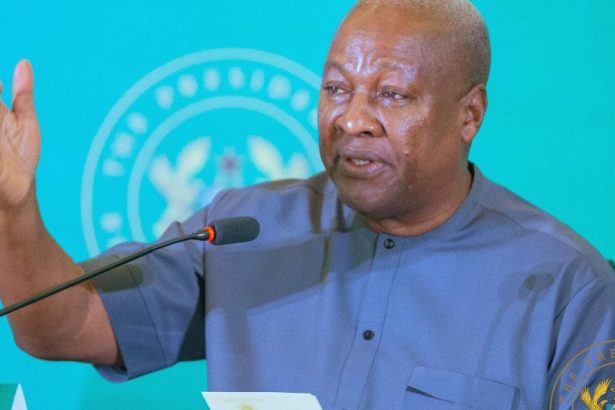
President John Dramani Mahama said the projects are being financed under a newly approved US$300 million World Bank facility, which is expected to expand infrastructure and increase capacity within the second-cycle education system.
He disclosed this during an inspection of ongoing Ghana Education Trust Fund (GETFund) projects at Han Senior High School.
According to President Mahama, the construction of the 16 schools is intended to address congestion in existing institutions, particularly schools that have had to operate the double-track system because of inadequate infrastructure.
“Under that project too, we’re building 16 brand-new secondary schools so that we can ease the congestion in the existing schools,” he said.
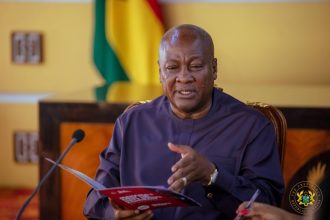
Beyond expanding infrastructure, the President announced plans to convert selected Senior High Schools in rural areas with large catchment populations into boarding institutions.
He said the move was aimed at addressing the difficulties faced by students who have to travel long distances to access secondary education.
President Mahama explained that the community day school model was more appropriate for densely populated areas where students live relatively close to schools and can commute from home.
“The intention now is to use the community day concept in the high-density population areas where the children can stay at home and easily go to school,” he said.
He added: “And then for those that are in the rural areas with a big catchment area, we turn them into boarding schools so that the children can reside on campus.”
The President said the proposed approach would allow government to tailor the SHS system to the realities of different communities, rather than applying a single model across densely populated urban areas and widely dispersed rural settlements.
The 16 new schools and proposed conversion of selected rural schools into boarding institutions form part of government’s broader efforts to expand access to secondary education while addressing infrastructure constraints that have contributed to the continuation of the double-track system.